
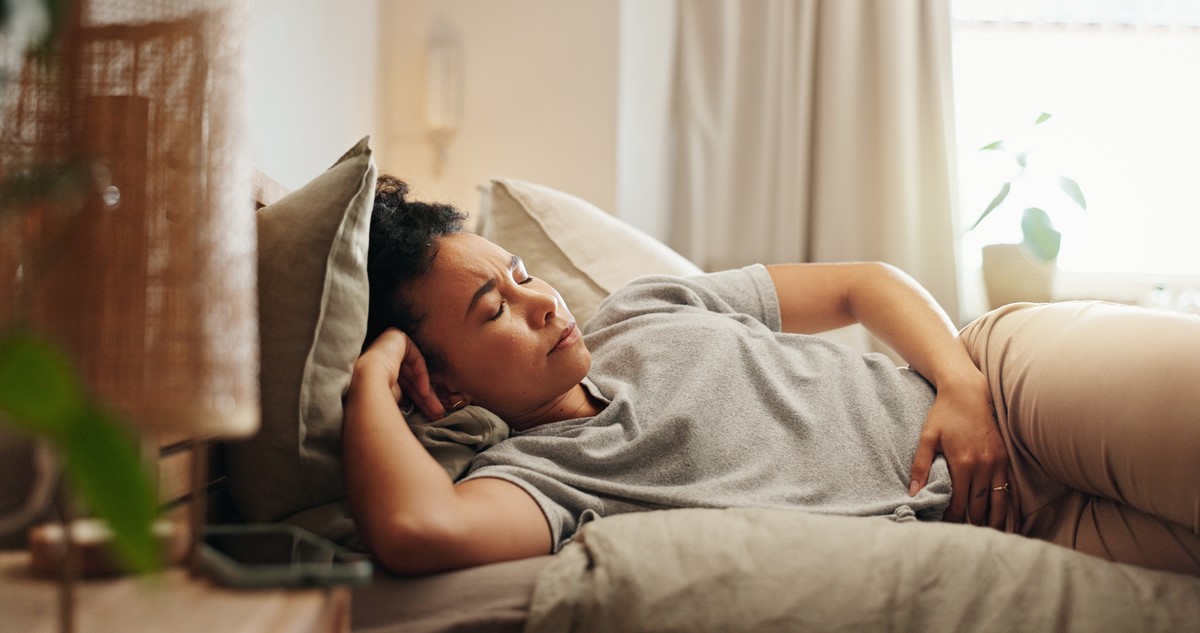
If you have endometriosis, you likely know the kind of tiredness that settles deep and does not shift, even after a full night of sleep. It is heavier than the fatigue that comes with a period, and it does not stay neatly inside the days you are bleeding. Fatigue is one of the most commonly reported symptoms of endometriosis, yet it often goes unaddressed as part of your care.5
Why endometriosis fatigue is different from ordinary period tiredness
Most people feel some tiredness around their period. For people with endometriosis, fatigue is a recognised symptom that can have a significant impact on daily life, affecting work, relationships and everyday activities. If you notice your energy levels are consistently lower than you would expect, it is worth raising with a GP alongside your other symptoms.1
There are specific reasons the fatigue with endometriosis feels so distinct, and understanding them can help you make sense of how to support your body.
How inflammation affects your energy with endometriosis
For many people with endometriosis, the body can be in a state of ongoing inflammation, though this can vary and shift across the cycle. The misplaced tissue triggers a continuous immune response, and keeping that response running takes energy quietly in the background, even on days when pain is not the main thing you are aware of.6
That same inflammation can disrupt your sleep, affect your mood, and make it harder to think clearly. The mental fog that can come with it is something many people with endometriosis recognise. If fatigue or low mood are affecting how you function day to day, both are worth raising with your GP.7
Iron loss, heavy bleeding, and your energy levels
Heavy periods are common with endometriosis, and repeated blood loss can gradually deplete your iron. When iron drops, your energy tends to follow. You might also notice breathlessness, a struggle to concentrate, or a flat, worn-out feeling that goes beyond ordinary tiredness.8
A simple blood test through your GP, called a full blood count, can check whether your iron levels are low. If anaemia is confirmed, it is treatable. Iron supplementation and dietary changes can both help, but the right approach depends on your individual results and is worth discussing with your GP or pharmacist rather than working out alone.9
What can help with endometriosis fatigue day to day
Managing fatigue alongside endometriosis looks different for everyone. Some people find it helpful to notice which points in their cycle tend to feel harder and plan around those where they can. If fatigue is significantly affecting your daily life, it is worth raising with your GP as part of a broader conversation about managing your symptoms.2
Gentle, regular movement such as walking, yoga, or swimming may help with both energy and mood. During a flare, higher-intensity exercise can be difficult to tolerate, and there is nothing to gain from forcing it. Starting with what feels manageable and adjusting from there is a more useful approach.10
When it's worth raising with your GP
Fatigue is a real part of the endometriosis symptom picture and deserves attention support by your GP. You can ask for an assessment that includes the impact on your quality of life, daily activities, and mental health, not just your pain levels, as part of your ongoing management.11
Consider speaking to your GP about fatigue if it is significantly affecting how you function day to day, if you suspect anaemia, if it appears to be worsening, or if you have not yet discussed it as part of your endometriosis care. You do not need to wait until it becomes unmanageable before raising it.12