
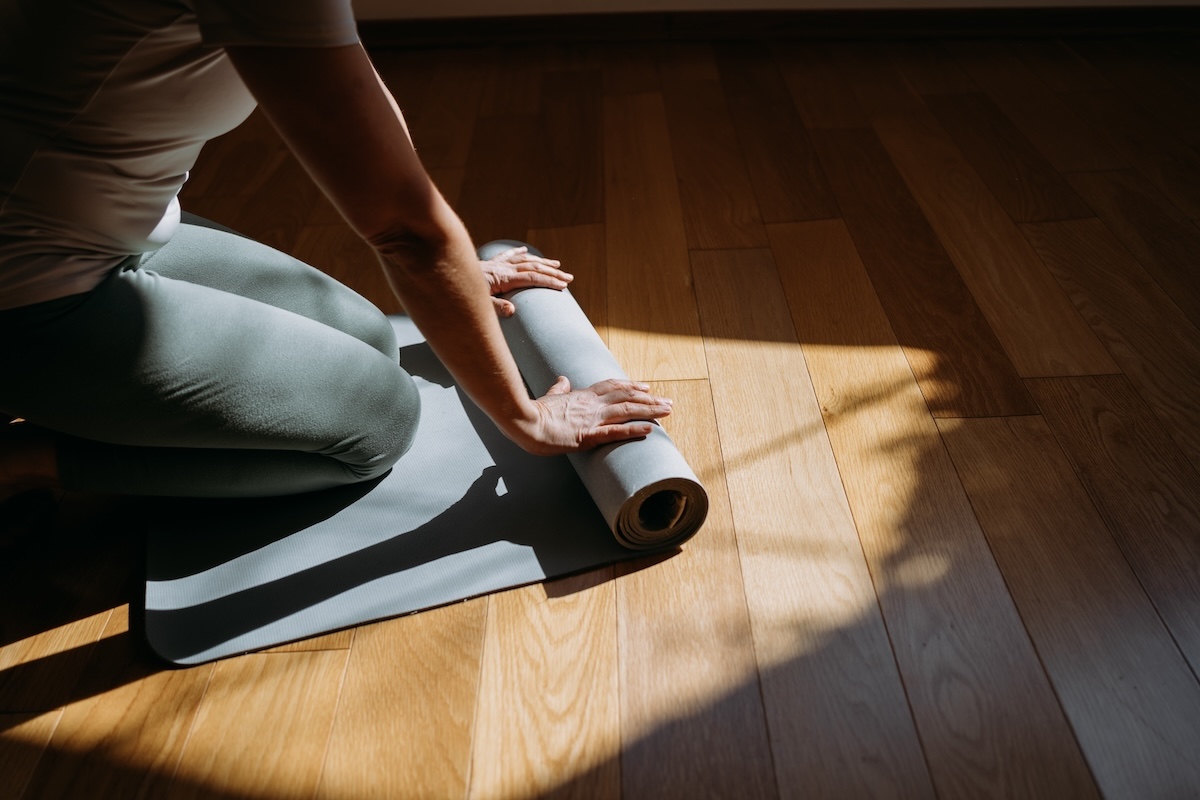
Some days, moving your body brings relief from the ache and heaviness that endometriosis can bring. Other days, the same activity leaves you hurting more than before. That inconsistency is real, and it means general advice about staying active rarely fits. Exercise with endometriosis is genuinely more complicated than most fitness guidance suggests.2
The kinds of movement that tend to feel better
Gentle, low-impact movement tends to sit better than high-intensity or high-impact activity. Walking, swimming, gentle yoga, and Pilates are often easier to manage. They let you keep moving without putting heavy demand on your pelvis and abdomen, where endometriosis tends to cause the most pain.3
What you can manage varies a lot, though. Something that feels fine one day may not suit the next, so treat any list of suggested activities as a starting point rather than a fixed safe set.
Gentle somatic movement in practice
Somatic movement keeps the focus on what you feel inside rather than on performance. In practice, it can look like slow, guided stretching where you notice what each position feels like in your body rather than how far you can reach. It includes things like gentle spinal rocking, supported hip opening, and breathing that engages the diaphragm, so your belly rises gently with each breath in.1
This kind of movement stays with release and ease rather than effort or range. You may find it a useful way to stay connected to your body without adding to pain levels.
Pelvic floor awareness with endometriosis
The behaviour of your pelvic floor, the group of muscles that sit at the base of your pelvis, is often affected by endometriosis, and that can add to pain and make things harder day to day. One common pattern is increased tone, which means excessive muscle tension. The muscles are held tight rather than relaxed, and that can feed the pain you feel during everyday activity, during sex, or with bladder and bowel symptoms.4
This matters because the usual advice to do pelvic floor exercises, like Kegels (repeatedly squeezing and lifting the pelvic floor), can make things worse if your muscles are already overactive. If that is the case for you, relaxation often helps more than further strengthening.5
Adjusting movement around a flare
Endometriosis symptoms shift from day to day and week to week. Adjusting how much you do to match how you feel is a big part of moving with the condition.
During a flare, when pain and fatigue are at their worst, gentle stretching or rest tends to suit you better than keeping to your usual routine. Simple supported positions can help, like lying on your back with your knees drawn gently to your chest, or lying on your side curled up. These may ease things without adding more demand on your body.6
Between flares, when symptoms settle, you may find you can add in more moderate activity, like a longer walk or a gentle Pilates session. The aim is to build on what feels manageable that day.7
Movement that tends to worsen symptoms
High-impact activity, like running on hard surfaces, jumping, or heavy lifting, can make pelvic pain worse during or after the session, especially mid-cycle or in a flare. Core work that puts strong pressure on your abdomen, like full sit-ups or hard crunches, can also feel uncomfortable, and may be worth leaving until you have guidance from a physiotherapist.
Yoga poses with deep, forceful inversions or strong abdominal compression, like certain twists held at full stretch, are worth approaching carefully. Gentle, restorative yoga has a different feel from vigorous Vinyasa or Ashtanga styles. If you practise yoga, a restorative or yin style often sits better when your symptoms are higher.
How gentle movement can help
Movement does not cure endometriosis, and it does not change the condition itself. Staying gently active may still help you manage symptoms. Gentle movement can lift your mood, ease muscle tension, and help your body keep functioning on your journey with endometriosis.8
When to work with a pelvic health physiotherapist
A physiotherapist with specialist training in pelvic health can assess and support the physical, musculoskeletal side of endometriosis. That covers pain during or after sex, bladder or bowel symptoms like urgency or pain, and pelvic floor muscle tension. These are parts of the condition that general exercise advice cannot safely cover on its own.9
You can ask your GP to refer you to a pelvic health physiotherapist on the NHS. Waiting times vary by area, and some people choose to see a private physiotherapist in the meantime. Either way, an assessment gives you a movement plan built around your body and your symptom pattern, rather than general advice.