
If you live with Premenstrual Dysphoric Disorder (PMDD), you may already know the particular weight of the days before your period. The low that arrives with little warning, the irritability that catches you off guard, the way your body feels harder to be in. Advice about exercise in the PMDD luteal phase often comes down to a single line: move more, feel better. You may find, though, that pushing hard in the late luteal phase makes things harder. Understanding why, and knowing what helps instead, can shift how you approach movement across your whole cycle.
What PMDD is, and why it is different from PMS
PMDD is a cyclical mood condition tied to your hormones. What causes it is a strong reaction in the brain to the natural rise and fall of oestrogen and progesterone across your cycle. It is a distinct condition, separate from premenstrual syndrome (PMS). The symptoms run more severe, more disruptive, and they sit more reliably in the late luteal phase, the one to two weeks before your period arrives.
This difference matters when it comes to movement. Much of what we know about exercise and premenstrual symptoms comes from PMS research. Where that evidence carries across to PMDD, it is flagged below. The two are not the same, and advice that suits PMS does not automatically transfer.
Why high-intensity exercise in the late luteal phase may worsen PMDD symptoms
Some people notice that high-intensity exercise feels harder to tolerate during the late luteal phase, particularly when symptoms are already present. This lines up with what happens in your body during this window. If you are already carrying hormonal strain, and heavy physical demand on top can add to it. That pattern is worth paying attention to.2
The evidence here is still building, and it does not yet come from large trials focused on PMDD. So this is an area where your own tracking tells you a lot. If high-intensity training in the late luteal phase consistently lowers your mood or worsens your physical symptoms, that is useful information.
What kinds of movement tend to help during late luteal
Gentle to moderate movement can ease stress, lift your mood a little, and take the edge off physical discomfort in the days before your period. Most of this evidence comes from PMS research. PMDD brings more severe symptoms, though the idea of low-demand movement as a support still carries across. The aim here is to keep your nervous system as settled as it can be during a tender window, rather than to hit a fitness goal.3
Movement that tends to sit well in the late luteal phase includes:
- Walking, particularly outdoors, at a comfortable pace
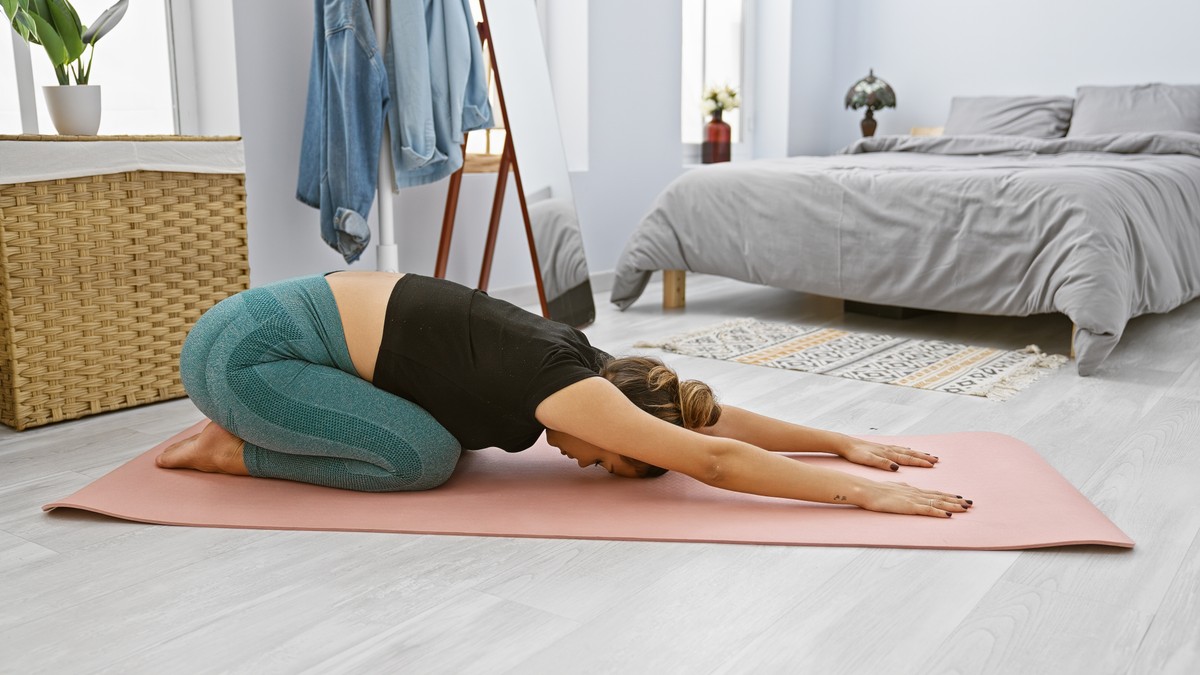
- Gentle yoga or stretching, focused on release rather than challenge
- Swimming at a moderate effort
- Light cycling or low-resistance cardio
- Slow, restorative movement that keeps your body active without asking for peak effort
The aim is to keep moving without piling onto the load your body is already carrying. Adjusting the type and intensity of your movement in the late luteal phase tends to serve you better than stopping altogether.

Adapting movement across the whole cycle, not just late luteal
One practical approach is to adjust the type and intensity of your movement to match where you are in your cycle, rather than keeping it the same all month. This is sometimes called cycle syncing. It is not a clinically tested protocol, though it makes intuitive sense. Your hormones shift a lot across the four phases of your cycle, and what your body can comfortably handle shifts with them.4
A broad framework might look like this:
- Menstrual phase (roughly days 1 to 5): rest, with very gentle movement if your energy allows. Walking or restorative yoga often suit these days.
- Follicular phase (roughly days 6 to 13): your energy tends to rise as oestrogen climbs. This is often a good time to build intensity, try something new, or return to higher-effort sessions.
- Ovulatory phase (around day 14): you may find your capacity for high-intensity or social exercise peaks here.
- Late luteal phase (roughly days 15 to 28, before your period): ease back on intensity. Lean towards movement that feels supportive rather than demanding.
These windows are approximate. Your cycle length and phase lengths may differ, and your PMDD symptoms can start at slightly different points from one cycle to the next. What matters is the principle underneath, more than the exact days: your movement does not have to look the same across the whole month.
Movement as mood support through late luteal
For many people, emotional symptoms can be a significant part of PMDD during the late luteal phase. Some people find gentle movement helpful during this time, although experiences vary. 1
Looking at movement this way can soften the all-or-nothing pattern PMDD can create: training hard through the follicular phase, then dropping off completely through late luteal. When you set your expectations around where you are hormonally, movement is more likely to stay a steady part of your life.
Tracking your cycle alongside your mood and energy can help you spot your own patterns over time. Once you know a particular phase reliably brings lower capacity, you can plan your movement around it, rather than meeting each harder phase as a surprise.
If your PMDD symptoms are significantly affecting your daily life, including your ability to exercise or stay active, speak with your GP. PMDD is a recognised condition, and there is support available beyond self-management.