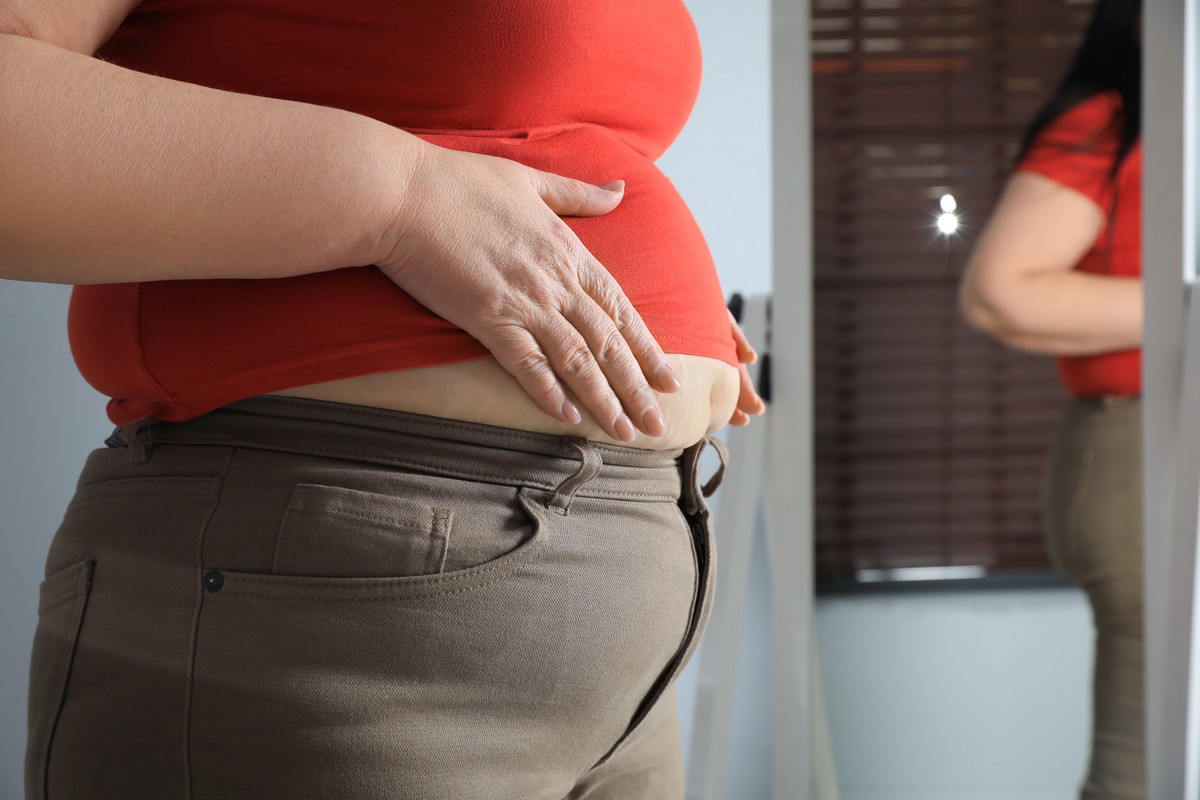
In the days before your period, a particular kind of discomfort can settle in. Your tummy feels puffier than usual. Your waistband suddenly feels tight, and a heaviness sits in your body and makes you feel larger than you did a week ago. If your relationship with your body shifts at this point in your cycle, with body image cycle phases bloating at its worst in the late luteal window, these changes are real.
Why your body changes in the lead-up to your period
The shifts you notice in the week or two before your period come down to your hormones. Oestrogen and progesterone rise and fall during this stretch, the late luteal phase, and the changes they bring together make up Premenstrual Syndrome (PMS). Physically, this often shows up as bloating, tender breasts, and changes in appetite. Emotionally, you may find yourself more prone to mood swings, anxiety, or irritability.2
The bloating in this phase comes mostly from your body holding on to more water in the run-up to your period. Your tummy can stick out more than usual, and you can feel heavier or puffier than you did. This is water retention.3
Supporting yourself as your body changes week to week
Thoughts about how you look can come up more easily in the days before and during your period. The physical symptoms, water retention, bloating, tender breasts, sit alongside the emotional ones, low mood, anxiety, and a sharper inner critic. Together they make it harder to feel at home in your body. You might catch yourself scrutinising your reflection differently, feeling uncomfortable in clothes that fit fine last week. You may also feel pulled toward self-judgment that is not there at other points in your cycle.1
The contrast with other phases can make it feel sharper. Around ovulation, when oestrogen tends to be higher, you may notice the opposite: feeling more comfortable in your body, more confident, more at ease around others. This cyclical quality is worth recognising. The feelings that arrive in the late luteal phase are a phase-specific experience, shaped by your hormones, and they pass.4
None of this makes the experience easier to live through. Knowing something will pass still leaves you to live through it. Still, understanding the pattern can change how much weight you give those thoughts when they show up.

Why the scale is particularly unhelpful in this window
Your weight can move around across your cycle because of hormonal water retention. Stepping on the scale in the late luteal phase can show a number that feels alarming but really reflects temporary fluid, rather than any lasting change. When you already feel uncomfortable in your body and unfamiliar to yourself, that number tends to add to the distress rather than tell you anything useful. Stepping away from the scale during this phase is a practical choice.5
What actually helps when bloating peaks
Tracking your cycle and symptoms over time is one of the most useful things you can do. Once you can see that the self-critical thoughts and the physical discomfort land at a predictable point, you can expect them rather than be caught off guard. This kind of pattern awareness gives you a small but real sense of control. You are not trying to stop the feelings, you just know what they are and roughly when they will ease.6
Gentle changes in the late luteal phase can also support how you feel. Regular gentle movement, balanced meals, enough sleep, and stress-easing practices like yoga or meditation can take the edge off general PMS symptoms, and some of the emotional weight that comes with them. They tend to lighten the overall load your body and mind are carrying.7
When exercise feels harder in this phase, leaning toward movement that feels restorative rather than punishing can help. This ties into a wider idea: focusing on what your body can do, rather than how it looks, lines up with more positive body image. That shift is harder when you feel bloated and self-critical. Small choices make a difference: a walk instead of a high-intensity session, a stretch class instead of nothing. These keep you in a working relationship with your body rather than a purely aesthetic one.8
There is also an approach worth knowing about, called body image flexibility. It is the ability to notice negative thoughts about your body without letting them steer your behaviour or define your day. Instead of arguing yourself out of feeling bad, or forcing a more positive view, you observe the thought, acknowledge it, and carry on without acting on it. Difficult feelings can still arrive. The practice is about giving them less hold over your day.9