
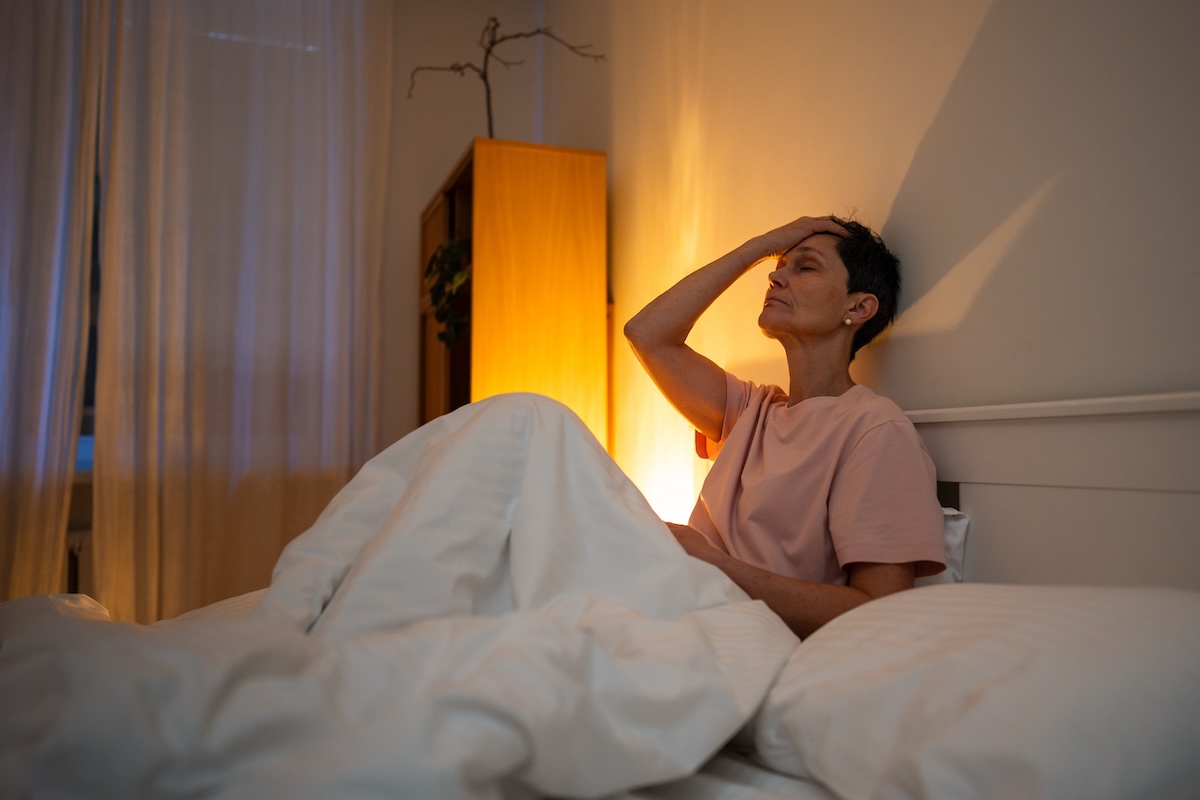
Lying awake at 3am, overheated and unable to settle back down, is one of the harder parts of going through menopause. Trouble falling asleep, waking in the night, waking too early, and sleep that leaves you drained rather than rested are some of the most common experiences during this stage, and they affect a large share of women going through it. Knowing what is driving the disruption is a useful first step towards doing something about it.2
How hot flushes and night sweats break up your sleep
When a hot flush or night sweat wakes you, it can take a long while to cool down and settle again, and by then your rest has already been broken up. These are vasomotor symptoms (VMS), the medical term for hot flushes and night sweats, and they are one of the main reasons sleep falls apart during menopause. Repeated over weeks and months, the pattern breaks up your sleep and cuts into the deeper, more restorative stages your body relies on.1
How low oestrogen can change how well you sleep
Even on nights without any obvious sweating, you may notice your sleep feels lighter or less restful than it used to. The hormonal changes of the postmenopausal years can shift the actual structure of your sleep. Trouble falling asleep, waking often, and waking very early are all patterns that can show up during this time, and for some people they settle into longer-term insomnia.3
Other physical changes can add to the picture. Aching joints, needing to get up to wee in the night, and conditions such as sleep apnoea, where your breathing stops and starts during sleep, and Restless Legs Syndrome (RLS) all become more common around this stage, and each can break up your sleep on its own. If you think you might have sleep apnoea or RLS, it is worth raising it with your GP rather than putting every sleepless night down to menopause, since both have their own treatments.4
How anxiety and poor sleep feed each other
Sleep and mood pull on each other in both directions. Going short on sleep can deepen anxiety and low mood, while menopause-related anxiety can make it harder to drift off in the first place. The cycle can feel hard to break, because the less you sleep the more anxious you feel, and the more anxious you feel the harder sleep becomes. Noticing this pattern early gives you a reason to reach out for support rather than waiting for it to settle on its own. If anxiety or low mood is getting in the way of your day-to-day life, speak to your GP.5
HRT and sleep: what the evidence shows
If night sweats are what keep waking you, Hormone Replacement Therapy (HRT) can help your sleep. By easing the hot flushes and sweats that wake you, it can let your sleep run in longer, less broken stretches. The progesterone part of HRT may also help you sleep, though this is less consistent and varies from person to person.6
Practical things that may help you sleep
Alongside medical options, small changes to your bedroom and your routine can help you rest better. These are sometimes grouped under the term sleep hygiene. They will not fix every cause of disruption, but they give you a steady base to work from.
- Keep the bedroom cool. A cooler room can take the edge off night sweats and help your body settle.
- Go to bed and wake up at roughly the same times, weekends included, so your body's natural rhythm has something to hold onto.
- Ease off caffeine and alcohol in the hours before bed. Both can disturb your sleep, and alcohol in particular can make night sweats worse.7
Cognitive Behavioural Therapy for Insomnia
Cognitive Behavioural Therapy for Insomnia (CBT-I) is a talking therapy that works on the thoughts and habits that keep insomnia going. A version adapted for menopause has solid evidence behind it for sleep problems at this stage, and it works well if you would rather not use HRT, or cannot. Access through the NHS varies by area, so ask your GP what is available where you are.8