

If the HIIT sessions that once left you energised now leave you wiped out for days, or a hard interval run brings on the heat and flush you are already trying to manage, your body is going through a real shift in how it handles intensity. High intensity training in perimenopause does not have to stop. The hormonal changes of this stage mean it tends to work best when it sits around a foundation of other training, and when you match the intensity to how your body is actually recovering.
Why strength training becomes the priority over HIIT
Most exercise recommendations for perimenopause focus on three core areas: strength training, daily movement like walking, and restorative exercise. Strength work is particularly important during this phase. As oestrogen levels decline, loss of muscle mass and bone density can accelerate, affecting your metabolism and body composition. Incorporating regular resistance exercises helps protect muscle strength, support bone health, and maintain overall physical function.1
Weight-bearing and resistance exercise also shapes your bone health. As oestrogen falls, your bone density can drop, which raises the risk of osteoporosis over time. Resistance work helps push back against that.2
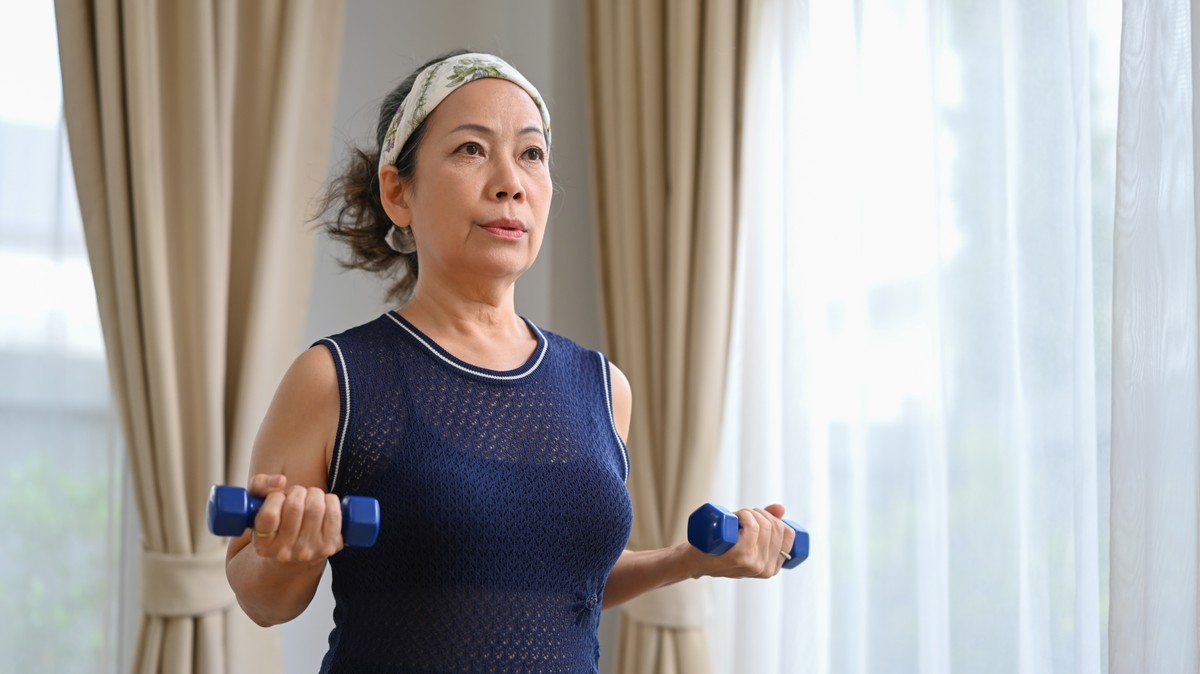
HIIT can sit alongside strength work. The usual advice is to build it around a base of at least two full-body strength sessions a week, so your intervals add to that base instead of taking its place. That keeps high intensity as a useful extra in your week, with strength work staying at the centre of your plan.3
Adjusting intensity around your symptom patterns
After a hard session you may notice more fatigue, and muscle soreness that lingers longer than it used to. The hormonal changes of perimenopause change how quickly your body recovers from training. This is a genuine shift in your recovery capacity, and it tends to respond better to adjusting than to pushing through.4
Oestrogen, progesterone, and growth hormone all help your body repair tissue and rebuild muscle. As those hormone levels fall, the gap your body needs between hard sessions gets wider. High intensity work without enough recovery can break muscle down faster and, over time, raise your risk of burnout and injury. If your stress response is already running high, even moderate exercise can feel demanding and tip your symptoms up, though this varies a lot from one person to the next.5
In practice, this means noticing how you feel in the days after a hard session and shaping the next one around that. You might do fewer high intensity sessions a week, shorten your intervals, or swap a HIIT session for a moderate effort on days when fatigue or soreness is high. The aim is to keep moving, and to let your programme flex with how your body feels right now.6
Hot flushes and high intensity training
One of the more frustrating overlaps between HIIT and perimenopause is how exercise intensity can interact with hot flushes. A sharp jump in how hard you are working can come right before a flush, whether it shows up on a measure or in how you feel. In plain terms, a sudden spike in effort may bring one on.7
This comes down to how your body manages its temperature. Shifting oestrogen unsettles your internal thermostat, so heat regulation becomes less steady. When the heat you generate during exercise lands on top of an already unsteady thermostat, you can overheat, and that can trigger or strengthen a flush.8

A single high intensity session may bring on a flush in the moment, but the longer picture looks different. One study found that 16 weeks of supervised moderate-intensity exercise clearly cut how often people reported hot flushes over time. So steady moderate activity may help you manage flushes overall, while individual high intensity sessions carry a higher chance of setting one off.9
If hot flushes are a big concern for you, a few practical tweaks can help. You might train in cooler spaces, wear moisture-wicking clothing, keep more of your sessions at a moderate pace, and give yourself enough warm-up and cool-down time so your temperature does not spike too suddenly.
Cardiovascular benefit without relying on high intensity
Looking after your heart matters in perimenopause. Oestrogen helps protect your cardiovascular system, and as your levels fall, that protection eases and your risk of heart disease rises over time. Regular cardio is one of the main ways you can work against that.10
You do not need high intensity training to reach your heart-health goals. Current guidance recommends at least 150 minutes of moderate activity a week, like brisk walking or cycling, or 75 minutes of vigorous activity. That 150-minute moderate target is well within reach through activities that are unlikely to bring on a flush or leave you needing long recovery. Brisk walking, swimming, or cycling two to three times a week can lower your risk of heart disease and stroke.11
If you enjoy HIIT and it sits well with you, those 75 minutes of vigorous activity are a valid way to reach the same heart benefit in less total time. Either route works, and during a phase where recovery is a real limit, the moderate path tends to cost you less.
Recovery as a non-negotiable part of training
Recovery is the time your body uses to adapt and rebuild. In perimenopause, that time takes longer. When you treat rest days as optional, or keep pushing through fatigue, you work against the very adaptation you are training for.
Balancing training and rest comes down to adjusting your effort, and you can do that while still moving. Active recovery, like yoga and Pilates, supports your body's repair while building flexibility and the kind of low-load strength that complements your harder sessions.12
If you are adapting your training and want help structuring it around your symptoms, your GP or a physiotherapist experienced in perimenopausal health is a practical next step.