
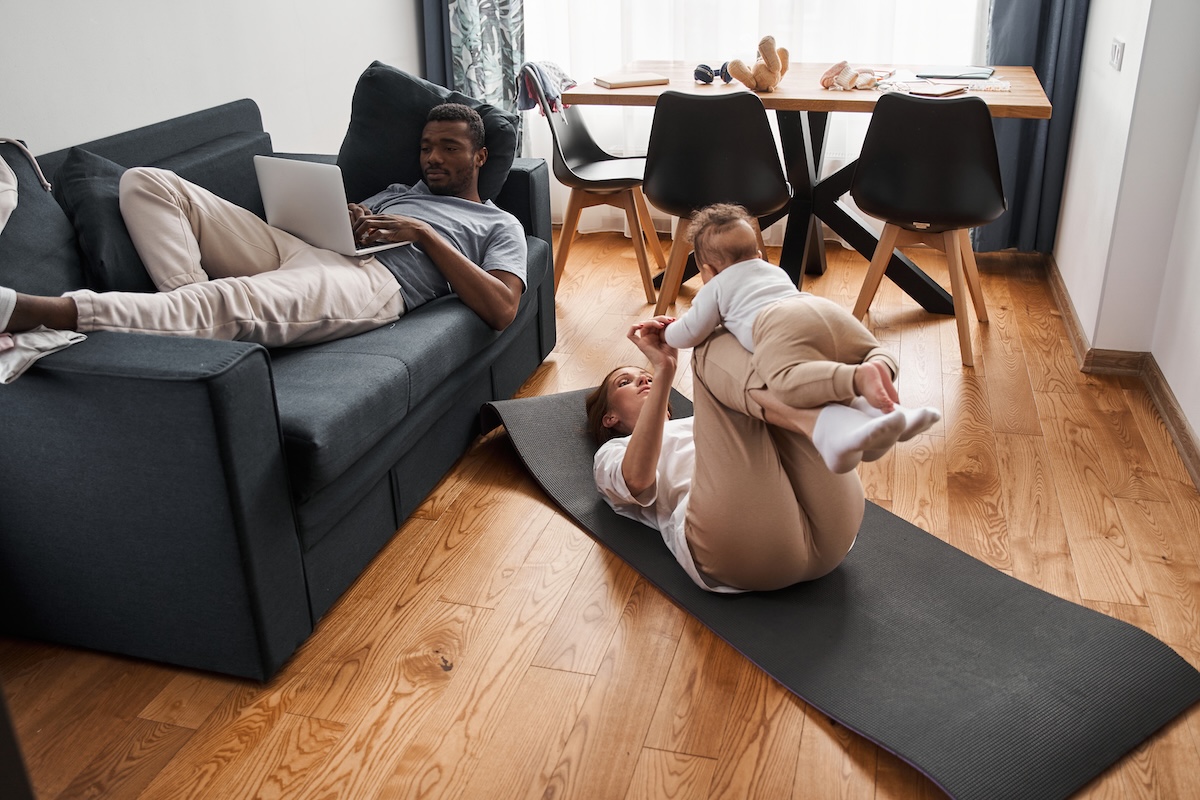
If you are breastfeeding and thinking about getting back to movement, you might already know the feeling of full breasts mid-session, or the low-level tiredness that makes even a short walk feel like a negotiation. Knowing what to expect with exercise while breastfeeding is less about restrictions and more about a few simple adjustments that make movement feel far more manageable. If you've had a straightforward birth, gentle activity like walking, light stretches, and pelvic floor exercises can start as soon as you feel ready, though it helps to wait until after your six-week postnatal check before going back to anything high-impact. If your birth was more complicated, involved a caesarean, or you had a perineal injury, talk to your midwife, health visitor, or GP before increasing your activity.5
Moving your body can support your recovery in a few ways. It can lift your energy, help you relax, and may lower the chance of postnatal depression. It does not replace professional mental health support, though it is a genuinely useful tool alongside it. Pregnancy hormones can also leave your ligaments and joints looser for six months or more after birth, which raises the risk of injury if you do too much too soon. Easing back in gradually is the approach most likely to keep you moving consistently.6
Breast support during exercise
Your back and cup size have likely changed since before pregnancy, so an old sports bra may no longer give you enough support. Getting measured for a new one is a practical first step before going back to anything with bouncing or impact. A well-fitted, supportive bra matters even more when you are breastfeeding.7
Full breasts can feel uncomfortable when you move. Alongside a well-fitted bra, clothing that does not press on the breast tissue can help. You might find layering a supportive crop top under a looser top works well. These are comfort-led choices rather than clinical rules, though they can make a real difference to how a session feels.1
Staying hydrated when you are active and breastfeeding
When you are breastfeeding and moving, thirst can creep up faster than usual. Breastfeeding raises your fluid needs, and physical activity adds to that. Around 6 to 8 glasses of fluid a day is a reasonable baseline, and you will likely need more on top when you are exercising or feeding. Keeping a drink nearby during a session, and sipping before and after, is a simple habit that supports your hydration and your milk supply. Water is the most practical choice.8
Timing feeds around exercise
You may find it more comfortable to feed or express before you exercise rather than after. This eases the heaviness of full breasts during movement and can make the session feel more manageable. It is a comfort-led approach rather than a clinical rule, and it is one of the adjustments people tend to mention most.9
If you are exercising with your baby, at a buggy fitness class for example, it makes sense to leave a short gap after a feed before you start, so your baby's stomach has time to settle. The right amount of time varies, so follow your baby's cues and use your judgement.10
Intensity, milk supply and what the evidence shows
Regular, moderate exercise, like a brisk 30-minute daily walk, does not change the quality or quantity of your breast milk.11
Mild or moderate exercise does not raise lactic acid levels in your milk. Very hard exercise can lift it for a short while, which may change the taste of your milk slightly, though there is no sign this harms your baby. If your baby seems fussy after a high-intensity session, a quick rinse of your skin before feeding may help, since the salty taste of sweat can add to fussiness too. This comes from the available evidence rather than a UK clinical body, and your own experience may differ.2
Pelvic floor considerations throughout the postnatal period
Pelvic floor exercises matter through your postnatal recovery, whether or not you are breastfeeding. You can start them within the first few hours after birth, once any catheter has been removed, and keep them up regularly. You should also be given information about pelvic floor exercises and how they help prevent leaks and prolapse, where the pelvic organs lose some of their usual support.312
High-impact activities where both feet leave the ground at once, like running or jumping, are worth easing back into gradually, once lower-impact movement feels comfortable. If you notice any of the following during or after exercise, stop and speak to your GP or a women's health physiotherapist:13
- A feeling of heaviness or pressure in the vagina
- Any leaking of urine
- Any leaking of faeces14
If you are not sure where to start with pelvic floor exercises, or you want guidance shaped around your birth, asking your GP for a referral to a women's health physiotherapist is a good next step.4