Hair coming away in your hands when you wash it, the thinning you start to notice in the mirror a few months after birth. Postpartum hair loss is one of the more unsettling changes after having a baby, and one of the least talked about. It has a clinical name, telogen effluvium, and a clear cause: the sharp drop in oestrogen that follows giving birth. Understanding why it happens, and why it eases, can make it easier to sit with.
Why postpartum hair loss happens
While you were pregnant, your hair may have felt thicker and fuller than usual. That comes down to raised oestrogen, which keeps your hair in its active growth phase, called the anagen phase, for longer. After birth, oestrogen drops sharply. That fall signals a large number of hairs to move into the resting and shedding phase, called the telogen phase, all at once. The increased shedding you notice a few months later comes from that shift.2
The hair follicles themselves remain healthy throughout this process. Your hair sheds heavily for a period as the hairs that remained in place during pregnancy fall out in a much shorter window than normal, before your growth cycle returns to its usual baseline. While this shedding is typically driven by postpartum hormonal shifts, other factors can also contribute to or prolong hair loss after birth. Excessive blood loss during delivery or an inadequate postnatal diet can lead to iron deficiency anaemia, which is a known cause of hair shedding. If your hair loss feels persistent, severe, or is accompanied by fatigue, consulting your doctor can help rule out underlying nutritional or medical causes.13
When postpartum hair loss typically starts and peaks
Shedding usually begins around two to four months after birth, and often reaches its peak around the four-month mark. That delay is part of why it can catch you off guard. The birth itself is well behind you by the time the shedding becomes noticeable.4
The heavy shedding typically slows a lot within six to twelve months. Your hair generally returns to its pre-pregnancy fullness and growth cycle around the time of your baby's first birthday. Regrowth starts as soon as the old hairs fall out. One of the first signs you might notice is a gradual drop in how much you shed each day, followed by short, fine new hairs, often called baby hairs, most visible along your hairline.5
What helps and what does not
There aren't currently any evidence based treatments that can prevent postpartum hair loss. Because it comes from a normal hormonal shift, products aren't usually prescribed or recommended. How you care for your hair during this time can still make a practical difference to how it looks and feels, and it can help limit extra breakage on top of the shedding.6
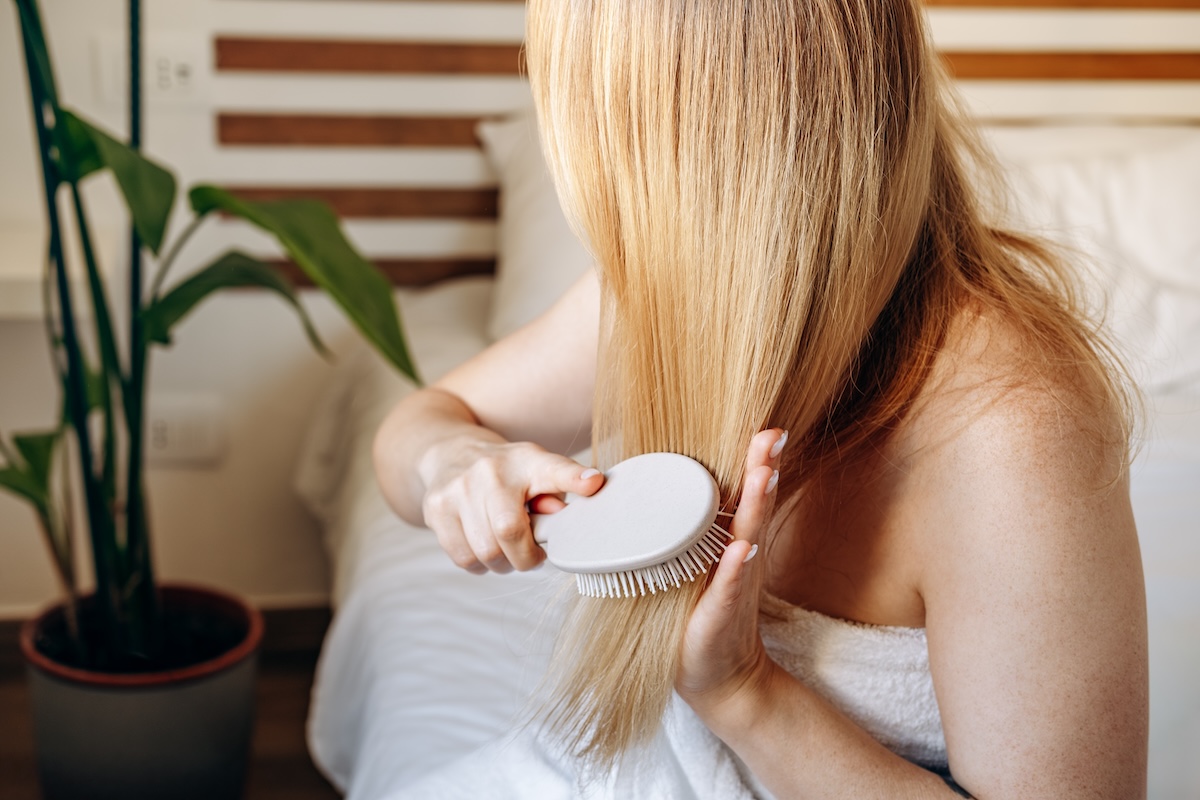
A volumising shampoo and a lightweight conditioner kept mainly to the ends can help, along with steering clear of heavy or intensive conditioning products that weigh hair down further. Being gentle when you wash and brush helps cut down on avoidable breakage.7
A balanced diet with a wide range of nutrients supports healthy hair and new growth. No supplement stops the shedding phase itself, though. If you are thinking about supplements, it is worth talking to your GP first, particularly while breastfeeding.8
When to speak to your GP
Postpartum hair loss usually shows up as all-over shedding that is fairly even across your scalp. Patchy loss is different, and that difference matters. Speak to your GP if the shedding is severe, if hair is coming out in clumps, or if you notice bald patches. These patterns can point to a separate condition that needs looking at.9
It is also worth calling your GP if the shedding carries on past twelve months. Shedding that lasts longer than that can sometimes point to something else, such as a thyroid condition or low iron. Both are worth ruling out with a blood test.10
If you also notice things like extreme tiredness, significant weight changes, or low mood that will not lift alongside the hair loss, raise all of it with your GP at the same appointment. Low mood after birth can have more than one cause, and your GP can help work out what needs attention. If you are struggling with your mental health at any point after birth, you can also speak to your midwife or health visitor, or call NHS 111.11