
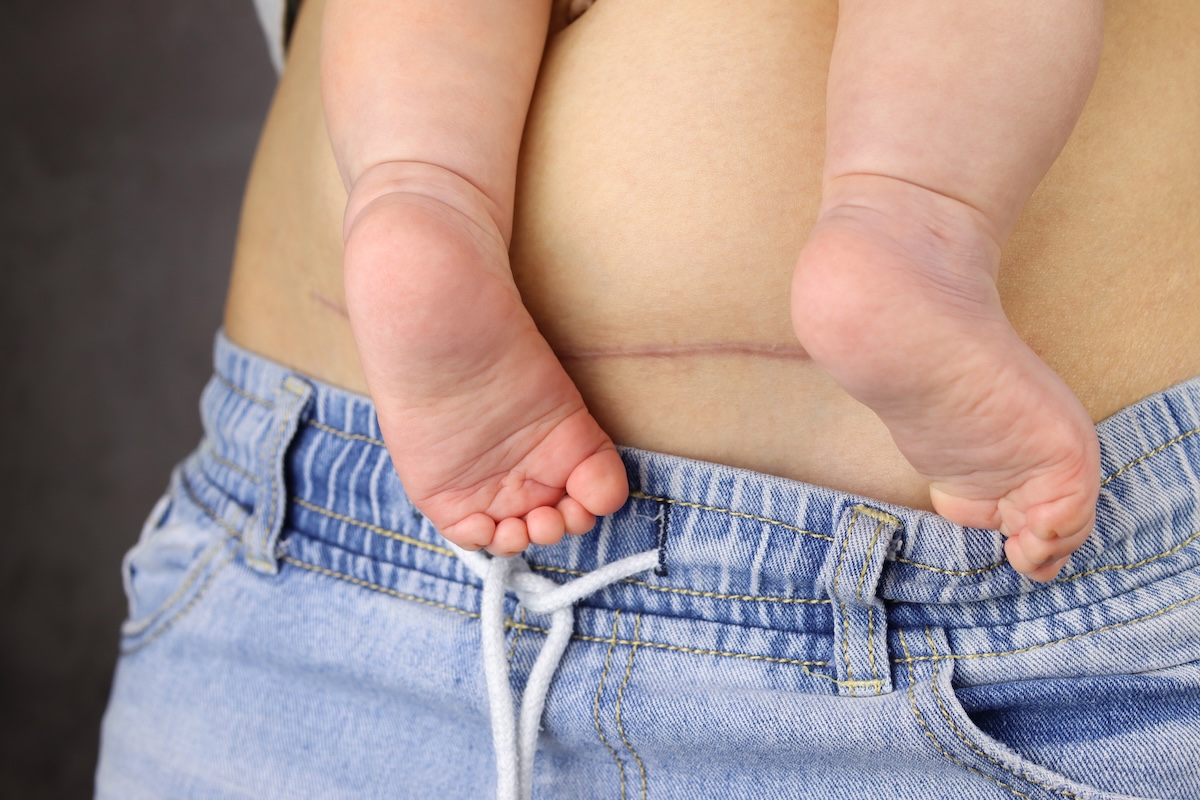
The tightness, the itching, the strange numbness along a scar line. These sensations are common after birth, but they are rarely talked about in the detail that would actually help. You might have left hospital with a dressing over your abdomen, or stitches in your perineum, and very little explanation of what comes next. Scar recovery after birth, whether from a caesarean or a perineal tear, is its own process, and knowing what to expect can make it easier to manage. A caesarean is a major operation, and recovery usually takes around six weeks, though this varies. Up to nine in ten first-time mothers who have a vaginal birth will have some form of tear, graze, or episiotomy.1
A caesarean involves a cut of around 10 to 20cm through your abdomen and womb. As it heals, your body builds scar tissue, and sometimes that tissue attaches to the layers beneath it, which can leave you with a pulling or tight feeling. These attachments are called adhesions. After a vaginal birth, up to 90% of first-time mothers have a perineal tear. Tears range in depth, from a minor graze (first degree) to a deeper tear that involves the muscle and, in some cases, the anal sphincter (third or fourth degree). An episiotomy is a surgical cut to the perineum. Deeper tears and episiotomies need stitches.2
What normal healing feels like
In the early weeks, a caesarean scar is often tender to touch, can feel itchy and numb in patches. The skin around it can feel tight when you stand up or move. At first the scar may look pink, red, and slightly raised. Over time, usually around two years, it tends to fade to a pale, flat line.3
After a vaginal birth, soreness and tenderness in your perineum for two to three weeks is normal. Stitches are usually dissolvable, though this depends on the depth of the tear and what was decided at the time. Stinging when you wee is common, and pouring lukewarm water over the area as you go can help ease it.4
Signs that are worth getting checked
Breathwork and gentle movement as a starting point
In the early days after a caesarean, if your pain is well managed, slow, deep breaths can support your recovery. Place your hands on your abdomen and let it rise as you breathe in. This helps you relax, keeps your lungs clear, and gently reconnects you to your tummy muscles gently over time.6
Short, gentle walks help too, as soon as you feel able after a caesarean, because moving around lowers the risk of blood clots. Keep them brief and build up slowly. For the first six weeks, avoid lifting anything heavier than your baby, and stay away from strenuous activity.7
Starting scar massage: caesarean and perineal
Scar massage can make the tissue more flexible and ease that pulling or tightening feeling. For both caesarean and perineal scars, the time to start is after your six-week postnatal check, once the wound has fully healed and there are no scabs left. If you are not sure whether your scar is ready, check with your GP or midwife before you begin.8
Caesarean scar massage
Use clean hands and a small amount of oil. Any plain, unscented oil works. You can start massaging about the scar if you feel more comfortable. Start with sweeping motions with your fingertips up towards your belly button, and then gently sweep side to side above the scar. When you feel ready, start by massaging side to side along the scar. If you scar is raised, this is called hypertrophic, then stay with this technique. If you scar is flat, then you can also use small circles and rub up and down over the scar. Aim for around five to ten minutes daily. Scar tissue remodels for up to two years after birth so starting later than you expected is fine. The tissue stays responsive throughout that time.9
Perineal scar massage
For the external scar, use a water-based lubricant or plain oil and massage gently in circles and side to side along the perineum. If you feel tightness inside, you can gently massage the internal scar as well. This is similar to perineal massage you may have done at the end of pregnancy. Place a clean thumb about an inch into the vagina, onto the scar area, and massage gently in a U-shape. If you are unsure, uncomfortable, or have had a deeper tear, speak to a pelvic health physiotherapist or your GP before you try internal massage.10
What pelvic health physiotherapy can offer
A specialist pelvic health physiotherapist can work with both caesarean and perineal scars. They use hands-on therapy and targeted massage to loosen scar tissue, work on adhesions, improve sensation, and ease pain or tightness that has not settled on its own. They can also help you retrain your pelvic floor and abdominal muscles after birth, and build a plan that supports you back into daily activities at a pace that works for you.11
In England, you can get pelvic health physiotherapy on the NHS, usually through a referral from your GP or midwife, if you have symptoms relating to your bladder, bowel or pain with intercourse, though waiting times vary between trusts. If NHS waiting times are long, private physiotherapy is another route. If you are past the early postnatal weeks and have not looked for support yet, it is still worth doing. Scar tissue stays responsive for up to two years, and physiotherapists can work with older scars too.12