
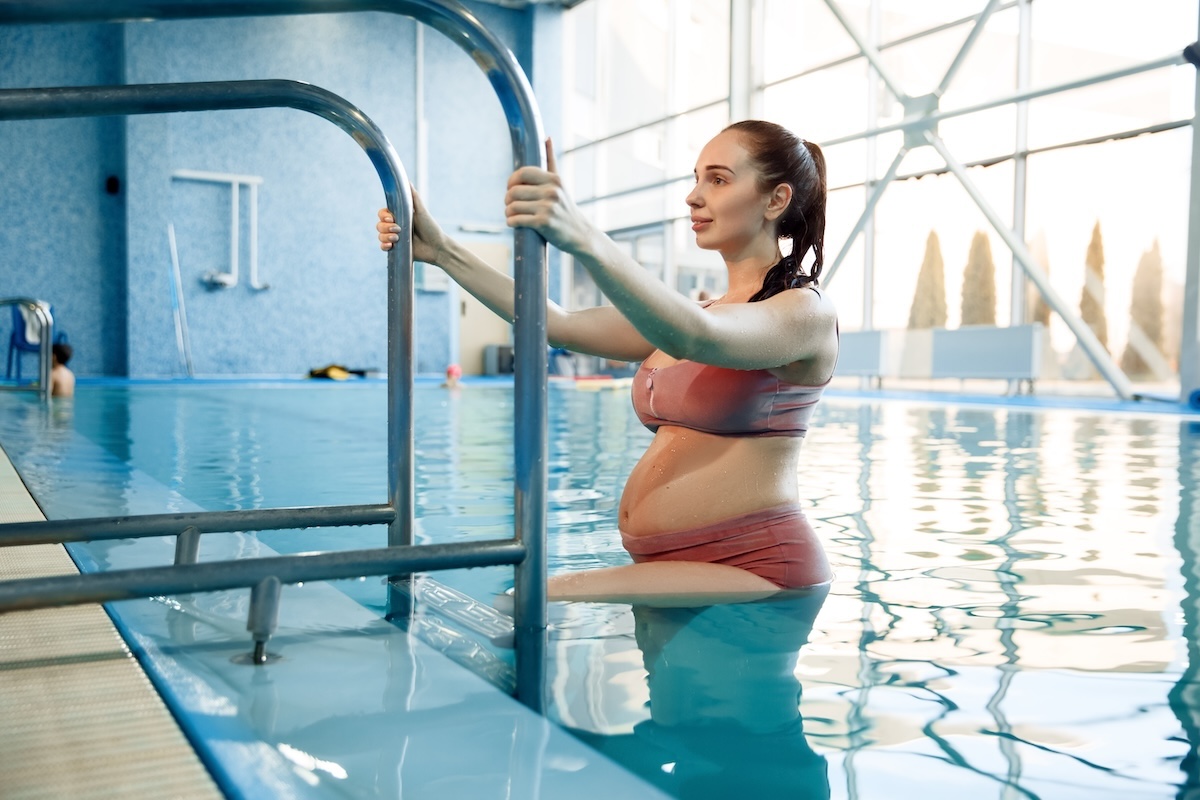
If the first trimester left you exhausted or queasy, the second often brings a noticeable shift. The tiredness that sat in you through those early weeks may start to lift, and the idea of moving your body can feel appealing again. This can be the most comfortable stretch of pregnancy for staying active, with the earliest fatigue behind you and the bump not yet heavy enough to limit every movement. Your bump is visible, though not yet heavy enough to make every step an effort. Your body is also changing in ways that make it worth adjusting how you move rather than stopping.1
What changes in the second trimester and why it matters for movement
As the baby grows, your centre of gravity shifts forward. You may notice this as a slight pull through your lower back, or a sense that your balance is not quite where it used to be. Pregnancy hormones also make your ligaments and joints slightly more flexible than usual. This might mean you need to be slightly more mindful regarding overstretching, and some that felt fine before may need a little more care now.2
Gauging your effort as the bump grows
For an uncomplicated pregnancy, the general UK guidance is at least 150 minutes of moderate activity a week, spread across the week in sessions that suit you. Moderate means you are working but not pushing hard. The simplest way to check is the talk test: if you can hold a conversation while you move, you are at about the right level. If you are too breathless to speak in full sentences, ease back a little.3
Your heart rate runs naturally higher in pregnancy, so it is not a reliable guide to how hard you are working. The talk test is the more practical measure to use day to day.4
What to step back from and why
From around 16 weeks, it is best to avoid exercises that have you lying flat on your back. In that position, the weight of your growing bump can press on a major blood vessel, which may leave you feeling dizzy or lightheaded. If you have been doing floor work, moving to a propped-up or side-lying position is straightforward.5
Contact sports like rugby are worth stopping during pregnancy because of the risk of impact to the bump. Activities with a real chance of falling, including horse riding and gymnastics, carry a similar concern. For resistance work, you may need to reduce the weight you lift, as the weeks of pregnancy go on. When you do need to lift something, keep your back straight, bend at the knees, and draw your core in gently.6
What pelvic girdle pain can feel like
You might feel an ache or discomfort in the front or back of your pelvis, sometimes spreading into your hips, thighs, or groin. This is pelvic girdle pain (PGP). Around 1 in 5 pregnant women experience it. The pain does not harm the baby, though it can be uncomfortable enough to affect daily life.7
You may feel it most during certain movements. Walking on uneven ground, climbing stairs, turning over in bed, standing on one leg, or spreading your knees apart, for instance getting out of a car, can all bring it on. Your own pattern may look different. The thing to watch for is pain that keeps returning with movement and does not settle quickly with rest.8
If the pain is getting in the way of daily life and has not improved after a week or two, it is worth raising with your midwife, GP, or a physiotherapist. If pain is severe, sudden, or comes with other symptoms, seek advice sooner rather than waiting.9
What staying active can look like day to day
Several activities work well in the second trimester and tend to suit the way your body is changing. Brisk walking is easy to reach for and simple to break into shorter sessions across the week. Swimming is a good option because the water supports your weight, taking pressure off your joints and back. Pregnancy-specific yoga or Pilates classes can help with both mobility and stability, so look for classes designed for pregnancy, as general ones may include positions that are not right at this stage. A stationary bike is another option, and it removes the balance concern that comes with cycling outdoors.10
Alongside that aerobic activity, gentle core and pelvic floor exercises are worth building in. Strengthening these muscles helps support your spine as it adapts to the shifting load, and keeping your pelvic floor strong can lower the chance of urinary incontinence later on. Simple moves like pelvic tilts, or gently drawing your lower tummy in towards your spine, can be done at home with no equipment.11
How this differs from the first trimester
In the first trimester, the focus is often on keeping movement going while you manage fatigue and nausea, staying aware of how you feel from one day to the next. The second trimester shifts that a little. Your energy tends to be more consistent, which gives you more room to build a routine. The adjustments now are mostly physical: your changing centre of gravity, your more flexible joints, moving off your back from 16 weeks, and keeping an eye on pelvic girdle symptoms. If any of these adjustments feel uncertain, or if symptoms such as pelvic girdle pain are getting in the way, raise them at your next antenatal appointment or with your midwife or physiotherapist.