
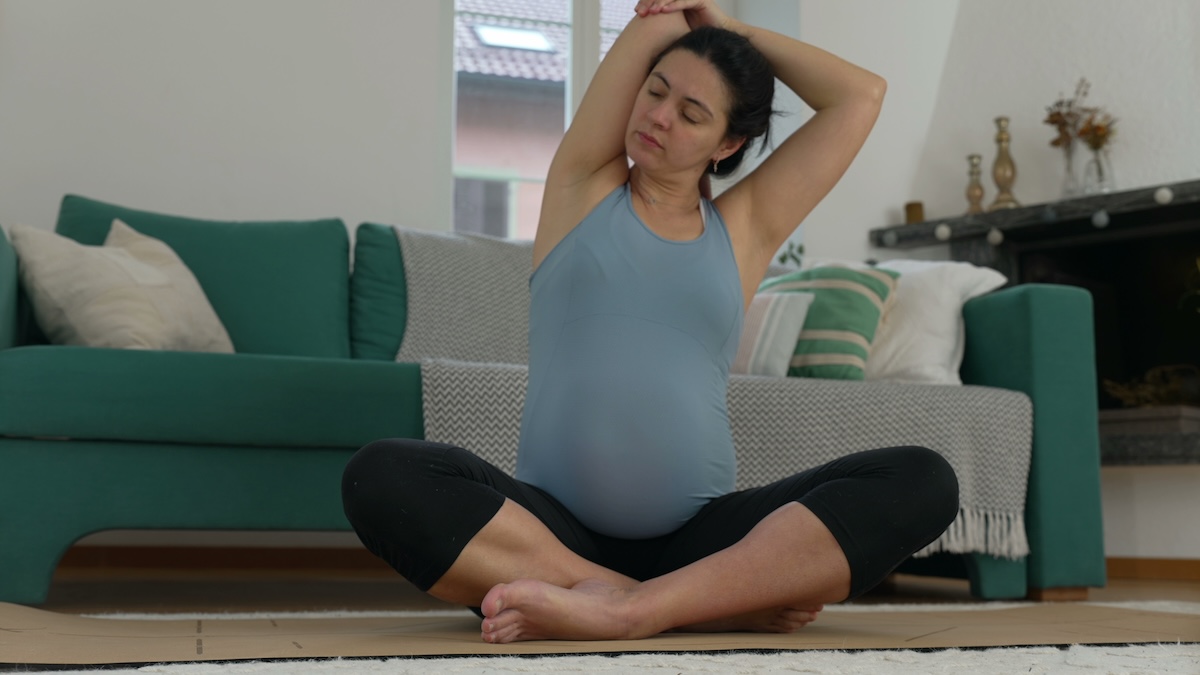
By the third trimester, exercise in pregnancy feels different. The heaviness sits low in your pelvis, your lower back aches, and the breathlessness arrives sooner than it used to. These are normal signs your body is working hard and adapting. What felt good at 20 weeks can feel awkward or uncomfortable by 30 or 34 weeks. Your body is asking you to adapt with it. The focus now is on moving in ways that feel manageable, and preparing gently for birth.
Why movement changes in later pregnancy
Back and pelvic pain can be more common during this stage of pregnancy for a variety of reasons, including changes in muscle strength, your centre of gravity and general movement patterns. If you feel pain in your pelvic area, mention it to your midwife, who can refer you to a women's health physiotherapist for a closer look.2
The point now is to keep a reasonable level of fitness, without pushing towards peak performance. Slowing down as pregnancy goes on is completely expected. Your midwife or GP is your first port of call for guidance that fits you.1
What tends to feel good: exercise third trimester pregnancy options
Walking: low-impact and adaptable
Walking is one of the most practical things you can do at this stage. It is gentle on your joints, needs no kit, and fits around your day. In most uncomplicated pregnancies, you can keep walking right up to birth, though your midwife's advice comes first.3
A simple way to check how hard you are working is the talk test. If you can hold a conversation while you walk, you are at a comfortable pace. If you are too breathless to speak easily, ease off. In the third trimester, shorter walks more often may feel more manageable than one long outing.4
Swimming helps take the load off
Swimming can feel like real relief in the third trimester. The water carries your weight, taking pressure off your joints, lower back, and pelvis in a way little else does now. Aquanatal classes, group sessions in the water led by a qualified instructor, are worth a look too. Choose a class made for pregnancy and led by someone with the right qualifications.5
Gentle movement for labour preparation
Prenatal yoga and Pilates work on flexibility, breathing, and relaxation, and can be a helpful part of getting ready for birth. Classes made for pregnancy are the right place to start. Neither promises an easier labour, though both can help you tune into your breath and body in the weeks before birth.6
Pelvic floor exercises are worth doing every day through pregnancy. Your pelvic floor is the group of muscles that supports your bladder, bowel, and womb. Tightening and releasing these muscles regularly can help your recovery after birth. If you are not sure you are doing it right, your midwife or a women's health physiotherapist can show you. Getting the technique right matters, so it is worth asking.7
What to stop and why
From 16 weeks on, it is best to avoid any exercise that has you lying flat on your back for more than a few minutes. The weight of your bump can press on a major blood vessel, which can leave you feeling faint.8
It is best to avoid anything that carries a risk of falling, being hit, or losing your balance. That covers contact sports like rugby and squash, along with horse riding, downhill skiing, and gymnastics. With your joints less stable now, falls are more likely and can do more harm.9
Scuba diving is not safe during pregnancy. Your baby has no protection from decompression sickness, so this is one to avoid completely, however experienced you are.10
How your body tells you to slow down
Stop straight away if you feel unwell, very tired, or in pain. Breathlessness is your cue to ease off. If you can no longer pass the talk test, you are pushing too hard. If symptoms hang around after you have rested, call your midwife or GP rather than waiting them out.11
Calf pain and swelling are on that list because pregnancy raises the risk of deep vein thrombosis, a blood clot in the leg. Do not wait to see whether it settles on its own.13
If you have questions about a particular exercise, or you are not sure whether something is suitable at this stage, raise it at your next midwife appointment or call your GP.