
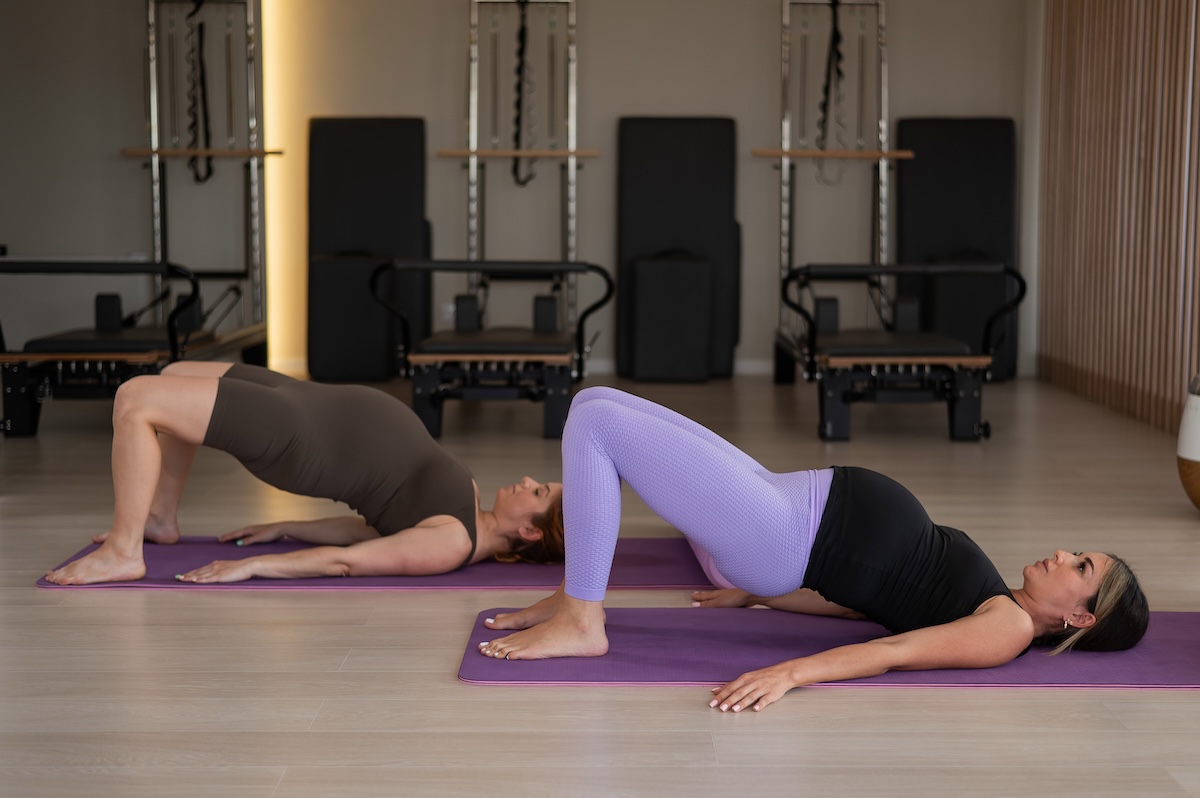
Pregnancy can change how your body feels early on. There can be a heaviness low in your pelvis, a sense that things are sitting under more pressure than before. The muscles taking much of that load are your pelvic floor, and they rarely get much attention until something feels off. You might reach the second trimester before you hear the words "pelvic floor" at all. Knowing what these muscles do, how to find them, and how to keep them working well is one of the most practical things you can do for your body during pregnancy.
What is pelvic floor?
Your pelvic floor is a group of muscles that sit like a hammock, running from your pubic bone at the front to the base of your spine at the back. They support your bladder, uterus, and bowel. As your baby grows, that extra weight presses down on them steadily, and without regular exercise they can weaken as pregnancy goes on.1
How to find and engage your pelvic floor
The feeling you are after is a squeeze and lift, as if you are trying to stop yourself passing wind and stop the flow of urine at the same time. It is a subtle movement and feeling internally, there should be no movement of your leg or bottom muscles externally. As you try it, check that you are not holding your breath, or pulling your stomach in. Those are signs the effort is going to the wrong muscles.2
If you are not sure you are getting it right, you can use a mirror to watch the area between your vagina and back passage. When you squeeze, you should see it draw in and up slightly. This is a way to learn the movement on your own, and it does not replace an assessment with a physiotherapist.3
Building a pelvic floor routine in pregnancy
A full session uses two kinds of squeeze. For the slow ones, aim for up to 10 holds of around 10 seconds each, letting go fully between each one. Then move to quick squeezes, up to 10 short, strong ones in a row. Try to do this at least three times a day.4
Starting while lying down can make it easier to find the right muscles. Once you feel confident with the movement, you can do the same exercises sitting or standing.
Why starting pelvic floor exercises in pregnancy matters
Working your pelvic floor regularly through pregnancy strengthens these muscles, so they cope better with the growing weight of your baby. It can also lower the chance of leaking urine when you cough, sneeze, or exercise, something often called stress incontinence. Starting early gives you as much time to build muscle strength to help towards the end of pregnancy and after birth. The earlier you begin, the more benefit you are likely to feel.5
What is normal to notice, and what to bring to your midwife
Leaking a small amount of urine when you cough, sneeze, or exercise is common in the second and third trimesters. Pelvic girdle pain (PGP), an ongoing ache or discomfort around your pelvis and hips, is common too. Around 1 in 5 pregnant women experience it. Both leakage and pelvic girdle pain can be treated, and support is available for you if this is what you're experiencing.6
Getting support from a pelvic health physiotherapist
Your GP or midwife can refer you to a specialist pelvic health physiotherapist on the NHS. You do not need to wait until after birth. If you are already noticing leakage or discomfort, raising it early means you can get an assessment and start treatment sooner.8
If you are already dealing with urinary incontinence, a supervised programme of pelvic floor muscle training lasting at least three months is usually the first treatment offered. This goes further than the general exercises here, with guided work that builds up over time alongside a physiotherapist.9
If you are not sure whether your symptoms need a referral, it is worth raising them at your next antenatal appointment. Your midwife can talk you through the next step.