There is tired, and then there is the kind of exhaustion that makes a short walk feel like a long one, and holding a normal conversation harder than it should be. When that level of tiredness arrives during pregnancy, it can be easy to put it down to the work your body is already doing. If a blood test comes back showing low iron, that exhaustion has a specific cause: iron deficiency anaemia in pregnancy. Shortness of breath, dizziness, and a heart that flutters or races for no obvious reason can be other signs your iron has dropped too low. If any of these feel familiar, raise them with your midwife or GP.1
Why do iron needs rise so much in pregnancy?
Pregnancy raises how much iron you need, for two reasons that connect. The amount of blood moving around your body grows by roughly half, and all that extra blood needs iron to carry oxygen. At the same time, your growing baby and placenta draw on your own iron stores to build their supply of red blood cells. Your body puts the baby first, so your stores can run down faster than you feel it happening.2
When your stores cannot keep up with these demands, iron deficiency anaemia can set in. The effects reach beyond tiredness. Low iron in pregnancy can raise the chance of complications during and after birth, including a greater chance of needing a blood transfusion. Your baby may also arrive with lower iron reserves, which can affect their health in the early months. Talking through your own risk with your midwife or GP is the clearest way to understand what this means for you.3
How are iron levels are checked in the UK?
In the UK, your iron is checked as part of routine antenatal care. You are offered a blood test at your first booking appointment, and again at 28 weeks. Those two points are chosen to catch low iron early and at the stage when demand is highest. Most iron deficiency anaemia in pregnancy turns up through this pathway, so you do not need to ask for a separate test unless symptoms come up between appointments.4
Where does iron comes from in your diet?
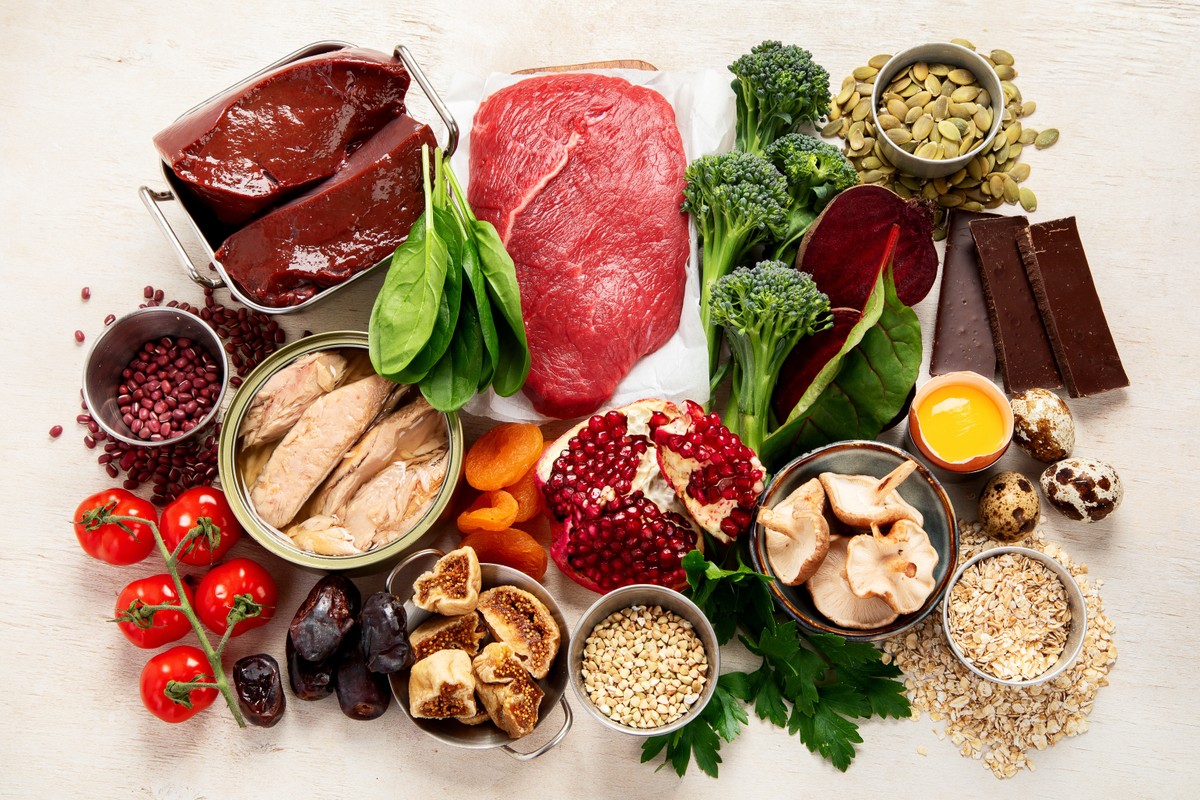
Iron in food comes in two forms, and your body takes them up differently. Haem iron, the kind in animal foods, is absorbed easily. Non-haem iron, the kind in plant foods, is absorbed less readily, though it still counts, especially if you eat little or no meat.5
Haem iron in meat and fish
- Red meat such as beef and lamb
- Poultry
- Fish and seafood
Non-haem iron in plant foods
- Pulses: beans, lentils, chickpeas
- Dark green leafy vegetables: spinach, kale
- Nuts and seeds
- Fortified breakfast cereals
What helps and hinders iron absorption?
Vitamin C is one of the best ways to lift how much non-haem iron your body takes from a meal. Pairing a source of vitamin C with iron-rich plant foods makes a real difference. A glass of orange juice, some sliced tomatoes, or red or yellow peppers alongside lentils or spinach can noticeably improve how much you absorb.6
Some everyday foods and drinks pull in the other direction. Tea and coffee contain tannins that lower how well you absorb iron. Milk and other high-calcium foods can get in the way too. The useful move is about timing rather than cutting things out. Try not to have tea, coffee, or a large glass of milk at the same time as an iron-rich meal or an iron tablet. Leaving a gap of around an hour either side can help your body make better use of the iron in your food.7
Iron supplements in pregnancy and the UK approach
In the UK, iron supplements are not handed to everyone who is pregnant. The approach in UK guidance is to screen for anaemia through the blood tests above, and to prescribe supplements only once iron deficiency anaemia is confirmed. When treatment is needed, the first option is usually oral iron tablets prescribed by a GP or midwife. Starting iron on your own is not advised, since taking it without a confirmed deficiency carries its own risks.8
Frequently Asked Questions
Your iron will be checked as part of your routine antenatal blood tests at your booking appointment and at 28 weeks. If symptoms come up between those appointments, or you want to talk through your diet or supplement options, your midwife or GP is the right place to start.