
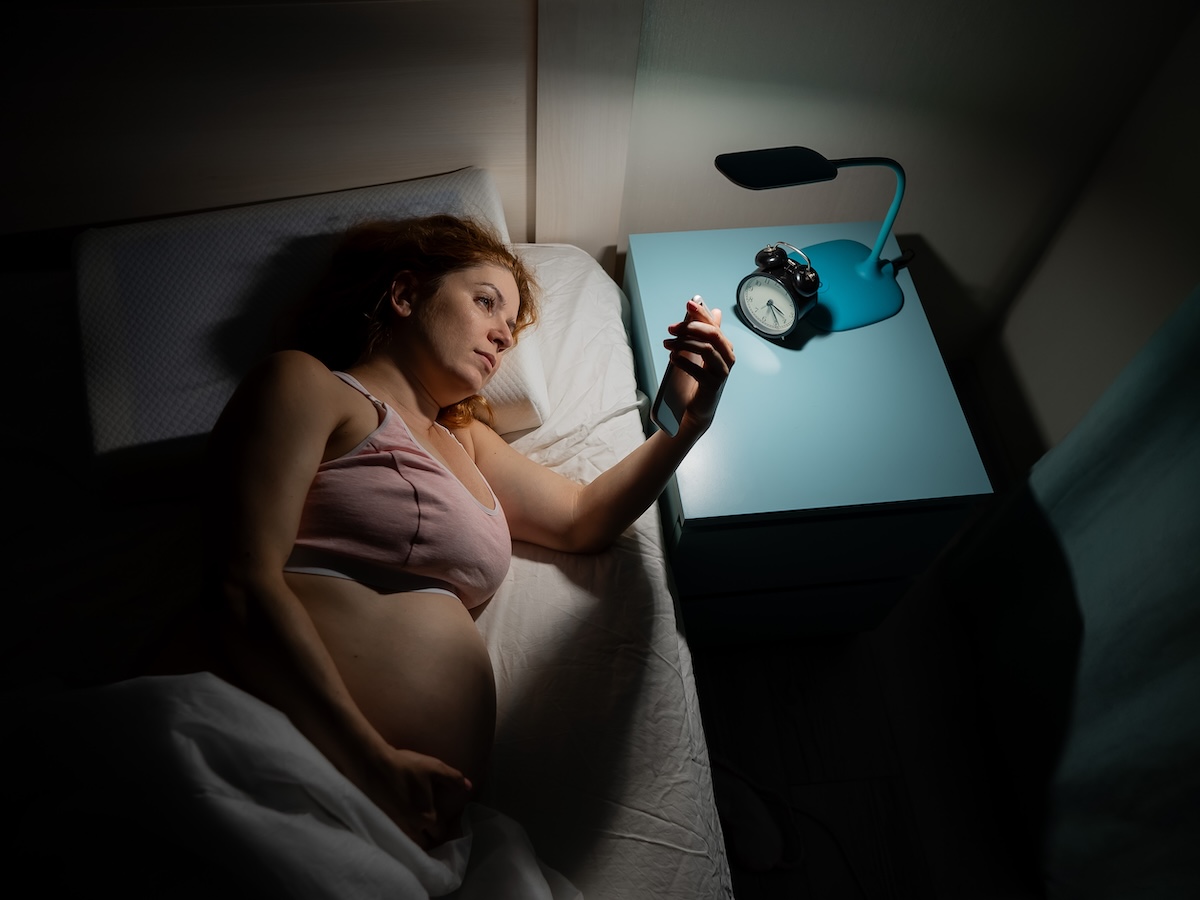
From the first weeks of pregnancy, a heaviness can settle into your body that no amount of rest quite touches. Sleep deprivation in pregnancy has a real impact: it can deepen the nausea of early pregnancy, tip your mood towards irritability and low focus, and leave you with less in the tank for the day ahead. This article covers what is happening in your body, and how to tell when the tiredness you are carrying is worth raising with your midwife or GP.
Why pregnancy fatigue is so physical
The deep tiredness of the first trimester comes partly down to progesterone, the hormone that rises sharply in early pregnancy and pulls your energy down with it. At the same time, your body is building the placenta and making more blood to support the baby. That is a lot of work happening quietly in the background, and the tiredness it brings is real and expected. It tends to be strongest in the first trimester, ease off through the second, then come back in the third as the baby grows, and as getting comfortable or carrying the extra weight through the day gets harder.1
How tiredness and nausea feed each other
In early pregnancy, tiredness and nausea tend to feed each other. When you are worn out, the nausea and vomiting can feel worse. And the nausea pulls the other way too: it drains your energy, leaves you short on fluids, and breaks up your sleep, which leaves you more tired again. The more nausea you have, the more drained you tend to feel, and the loop can be hard to break. Resting when you can is one of the simplest ways to take some pressure off the nausea side of it.2
How poor sleep affects your mood
When sleep is short night after night, your mood often takes the hit. Alongside the hormonal shifts of pregnancy and any anxiety you are carrying, poor sleep can leave you more irritable, less able to concentrate, and with a shorter fuse for the day. You may notice your usual capacity to cope feels thinner. This is common, and it is still worth paying attention to.3
Poor sleep over time also lines up with a higher chance of anxiety and depression during pregnancy and after birth. If you notice sadness, low mood, or anxiety that sticks around for more than a couple of weeks, or that gets in the way of daily life, it is worth speaking to your midwife or GP. Support is there through your maternity team and NHS Talking Therapies, which you can refer yourself to.4
Normal pregnancy tiredness and what is worth raising
Ordinary pregnancy tiredness tends to follow a pattern you can recognise. It is heaviest in the first trimester, usually lighter in the second, then back again in the third as the physical demands build. It comes from the hormonal and body changes of pregnancy, and although it can be heavy, it usually eases when you rest.5
Tiredness that feels severe, hangs on, and does not lift with rest is worth raising with your GP or midwife. A few underlying conditions can show up as unusual tiredness in pregnancy, and your care team can check whether anything else is going on.6
Symptoms that need prompt attention
Call your GP or midwife if your tiredness comes with any of the following:
- Persistent low mood, hopelessness, or losing interest in things you usually enjoy (possible signs of depression)
- Weakness or feeling lightheaded (possible signs of anaemia from low iron)
- Extreme thirst and needing to pee more often than usual (possible signs linked to gestational diabetes)
- Sudden tiredness that comes on with a fever7
If you are not sure whether what you are feeling is within the normal range, your midwife is the right first call. Raising it early gives your care team the chance to rule out underlying causes and get the right support in place.