
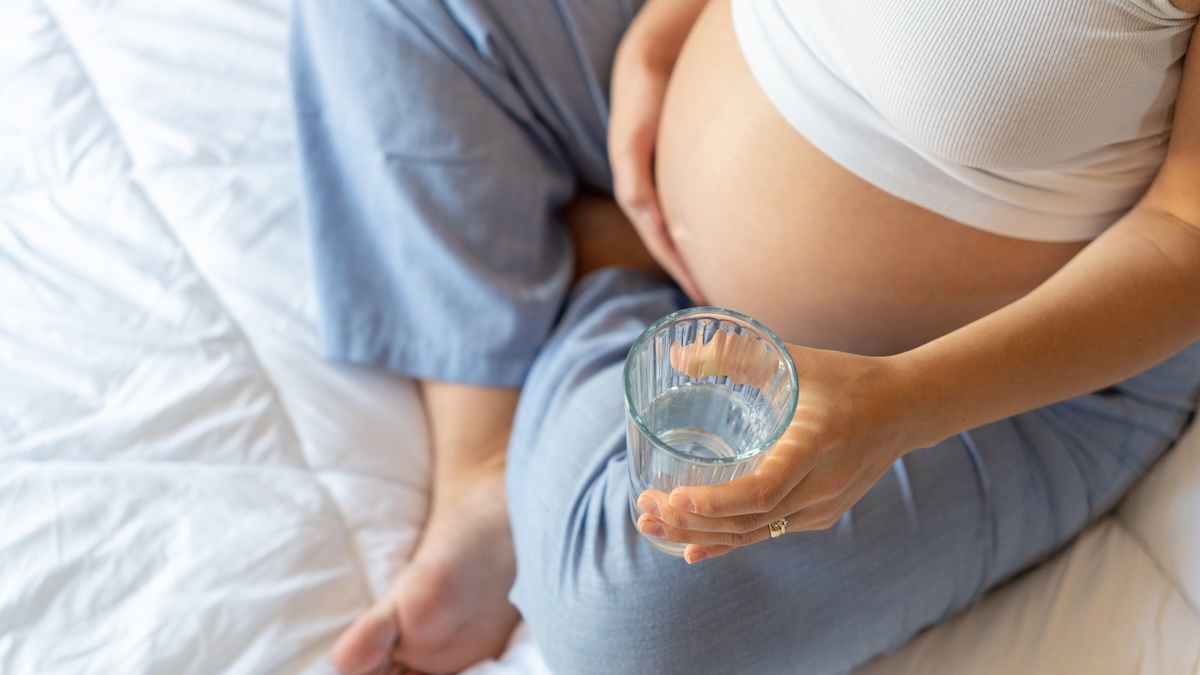
The itching, soreness, or dull ache around your bottom during pregnancy can be hard to place at first. Haemorrhoids, sometimes called piles, are common in pregnancy, though they rarely get an honest mention in antenatal classes or appointments. You might be quietly putting up with the discomfort rather than raising it with your midwife. It can feel awkward to bring up, but the discomfort is real, and there is plenty you can do about it.
What do haemorrhoids feel like?
You might notice an itchy bottom, soreness, redness, or swelling around the anus. There can be pain too, and a feeling that you still need to go to the toilet even when you have just been.2
You might see bright red blood on the toilet paper or in the bowl after a poo. You may also feel small, soft lumps that hang down outside the anus. These can feel like small peas, and in some cases grow to the size of grapes. Occasionally they need to be gently pushed back inside.3
What helps day to day with haemorrhoids in pregnancy
Softer stools through fibre and fluids
Softer stools mean less straining, and that is one of the most useful things you can change. Slowly building up the fibre in your diet, from fruit, vegetables, and wholegrains, gives your body more to work with. Drinking plenty of fluids alongside this matters just as much, since fibre works best when you have enough water on board. Adding fibre too quickly without the fluid to match can make things feel worse instead of better.5
Easing the strain on the toilet
When you feel the urge to go, go. Holding on tends to lead to more straining later. Once you are on the toilet, resting your feet on a small stool brings your knees above your hips, which puts your body in an easier position for passing a stool. Afterwards, pat the area gently with moist toilet paper rather than rubbing with dry paper, which can aggravate skin that is already sore.6
Creams and soothing relief
A pharmacist can point you towards creams that ease the itching and soreness. No over-the-counter haemorrhoid cream is specifically licensed for pregnancy, though some are used routinely. As a general guide, products without corticosteroids or local anaesthetics carry a lower potential risk. It is worth speaking to your GP, midwife, or pharmacist before using anything during pregnancy, since something sold without a prescription is not automatically safe to use right now.7
Alongside any cream, a few simple things at home can bring real relief. An ice pack wrapped in a cloth and held against the area can ease swelling and discomfort. A warm bath, or a shallow warm sitz bath, can also help by easing blood flow and relaxing the muscles around your bottom.8
What can make symptoms worse?
Try not to sit or stand for long stretches without a break. When you are resting, lying on your side takes pressure off the pelvic area. If you need a painkiller, it is worth avoiding anything with codeine, since codeine slows the gut and can bring on or worsen constipation, which is one of the main things that aggravates haemorrhoids. Your pharmacist or midwife can tell you what is suitable for pain relief during pregnancy.9
Why haemorrhoids are so common in pregnancy
Haemorrhoids are swollen blood vessels in or around your anus and rectum. During pregnancy, progesterone, the hormone that softens the walls of your blood vessels, makes them more relaxed, and the total volume of blood in your body rises. Together, these make it easier for those vessels to swell.10
As your uterus grows, it presses more on the blood vessels in your pelvis, and the veins there enlarge further. They tend to become particularly common from the second trimester onwards, though figures vary across studies.11
Constipation feeds into it too. Pregnancy hormones slow digestion, which makes stools harder to pass, and straining on the toilet raises the pressure on the veins around your anus. 12
In many cases, haemorrhoids that turn up during pregnancy settle on their own after your baby is born. That is not guaranteed, though it is a common pattern.1
When to raise it with your midwife or GP
Your midwife and GP see haemorrhoids all the time, so there is no need to feel awkward bringing it up. It is worth speaking to them if your symptoms are not easing with self-care, if they are getting worse, or if they keep coming back. And as above, any bleeding from your bottom during pregnancy is worth getting checked, even when haemorrhoids seem the obvious explanation.13