
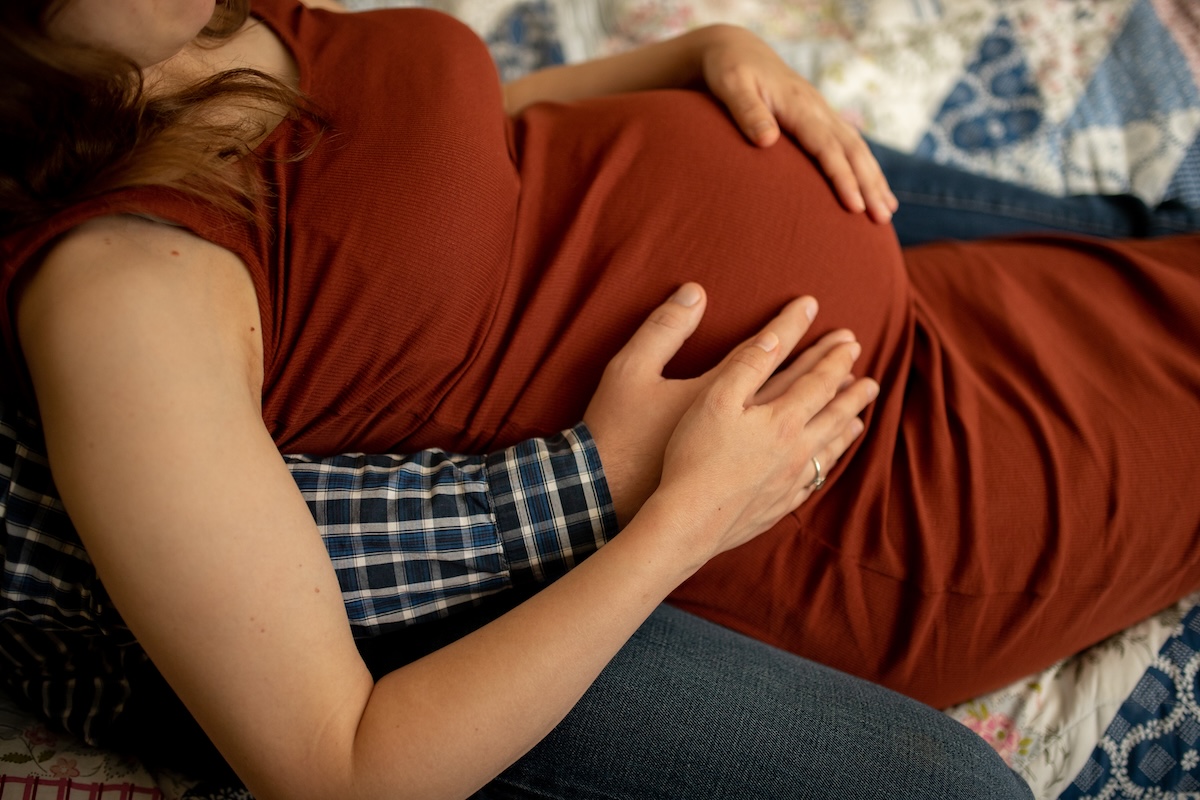
The breathlessness on the stairs, the backache that settles in by the afternoon, the heat you carry even when the weather is cool. By the third trimester, your body is handling a lot at once. These are all signs that you are in the final, most intensive phase of pregnancy. Understanding what is driving these changes, and what third trimester body changes to expect in the weeks ahead, can help you move through them with a clearer sense of what is normal.
What is happening to your body from 28 weeks?
From around 28 weeks, you may notice a run of new symptoms as your baby grows and your hormones shift. Backache, breathlessness, heartburn, and feeling hot most of the time are all common now.2
As your baby grows, there is less room for everything around it. The pressure on your bladder means more trips to the toilet, and you may notice a little urine leaking when you cough or sneeze. Your baby also pushes up against your diaphragm, so your lungs have less space to expand. That is why breathlessness feels so common in these weeks.3
You may notice other changes too. Some swelling in your hands and feet from water retention, early milk (colostrum) leaking from your breasts, and more Braxton Hicks contractions. These practice contractions are painless and a normal part of late pregnancy.4
What progesterone is doing in these final weeks
Progesterone helps get your body ready for what comes after birth. A lot of the preparation happening in these final weeks is driven by progesterone, even when you cannot see it.5
Why sleep gets harder in the third trimester
Broken sleep is very common in the third trimester. The discomfort of a growing bump is a big part of it.6
To make side-sleeping more comfortable, try tucking a pillow under your bump and another between your knees. This takes pressure off the muscles around your hips and pelvis, and can make a real difference to how settled you feel in bed.8
How your body prepares for birth
As you move into the final weeks, your body is already preparing for labour. Pregnancy hormones soften the ligaments in your pelvis to make room for your baby to pass through. Towards the end, your baby may drop lower into your pelvis. This is known as the head becoming engaged, and it tends to happen earlier in a first pregnancy than in later ones. You may also notice Braxton Hicks contractions, which are mild, painless tightenings across your stomach that help your womb prepare for labour.19
With your ligaments softening, it is worth going easy on your back and pelvis in these weeks. Gentle walking can help, and you may find a birthing ball useful. Rocking gently on a ball can ease pelvic discomfort, and upright, forward-leaning positions can help during early labour. If you have been advised to do less, or you have a higher-risk pregnancy, follow the guidance your midwife has given you.10
Pelvic floor exercises
Working your pelvic floor muscles during pregnancy can help prevent problems like leaking urine, which matters given the extra pressure your bladder is already under. Your midwife can show you how to do it and how often.11
Perineal massage from 34 weeks
From 34 weeks, perineal massage can help lower the chance of tearing during a vaginal birth, by gently softening and stretching the area over time. It is worth talking it through with your midwife to find out whether it suits you and how to do it properly.12
If any symptom feels sudden, severe, or clearly different from what has been normal for your pregnancy so far, raise it with your midwife or GP promptly rather than waiting for your next appointment.