

The luteal phase is the second half of your cycle, running from ovulation through to the start of your next period. During this window, progesterone rises and becomes the dominant hormone. For some people this phase brings premenstrual symptoms such as fatigue, mood changes, bloating, or headaches, and those can affect how movement feels. For others the luteal phase feels much the same as the rest of the cycle. Understanding what is happening hormonally during this window can help you make sense of your own experience and choose movement that works for you at this point.1
Why some people find movement harder in the luteal phase
In the days leading up to your period, you may notice your energy dipping, your patience thinning, or your mood shifting in ways that feel hard to place. As your hormones rise and then fall, progesterone affects your energy and mood differently from oestrogen. If these mood changes feel significant or start to affect your daily life, it is worth talking them through with your GP.2
You might notice your heart rate and breathing climbing faster than usual during a session that normally feels steady. Progesterone slightly raises your resting body temperature in the luteal phase, so your body works harder to cool itself when you move. The same workout can feel more strenuous because of it, especially in warm conditions.5
There is a shift in fuel going on too. In the luteal phase, your body may lean more towards burning fat than carbohydrates. The quick energy that high-intensity efforts rely on can be harder to reach, and the fluid retention and bloating that often come with this phase can add a sluggish quality to movement.6
Why high-intensity exercise can sometimes feel harder in this phase
If fast intervals or your usual weights suddenly feel heavier than they should, there is a reason. High-intensity interval training (HIIT) and heavy lifting both lean hard on stored carbohydrate, called glycogen, for fuel. Your access to glycogen can drop during the luteal phase, so hitting your normal paces or loads can feel harder than expected. Progesterone also slows muscle repair, so recovery from intense sessions can take longer, and the strength gains you might see in the first half of your cycle are less likely now.3
The session feels harder, and that feeling is real, even when your numbers have not changed. Your maximum exercise capacity tends to stay fairly steady across the cycle, while the sense of how hard a session feels rises when progesterone is high. In practical terms, the same session can take more out of you, even when your underlying fitness is exactly where it was.4
The case for moderate intensity and restorative movement
Because your body burns fat more efficiently in this phase, steady-state cardio tends to sit well with it. Cycling, swimming, hiking, or a longer walk lean less on glycogen stores, so they can feel more sustainable when your energy is lower. They match what your body is already doing in this phase.7
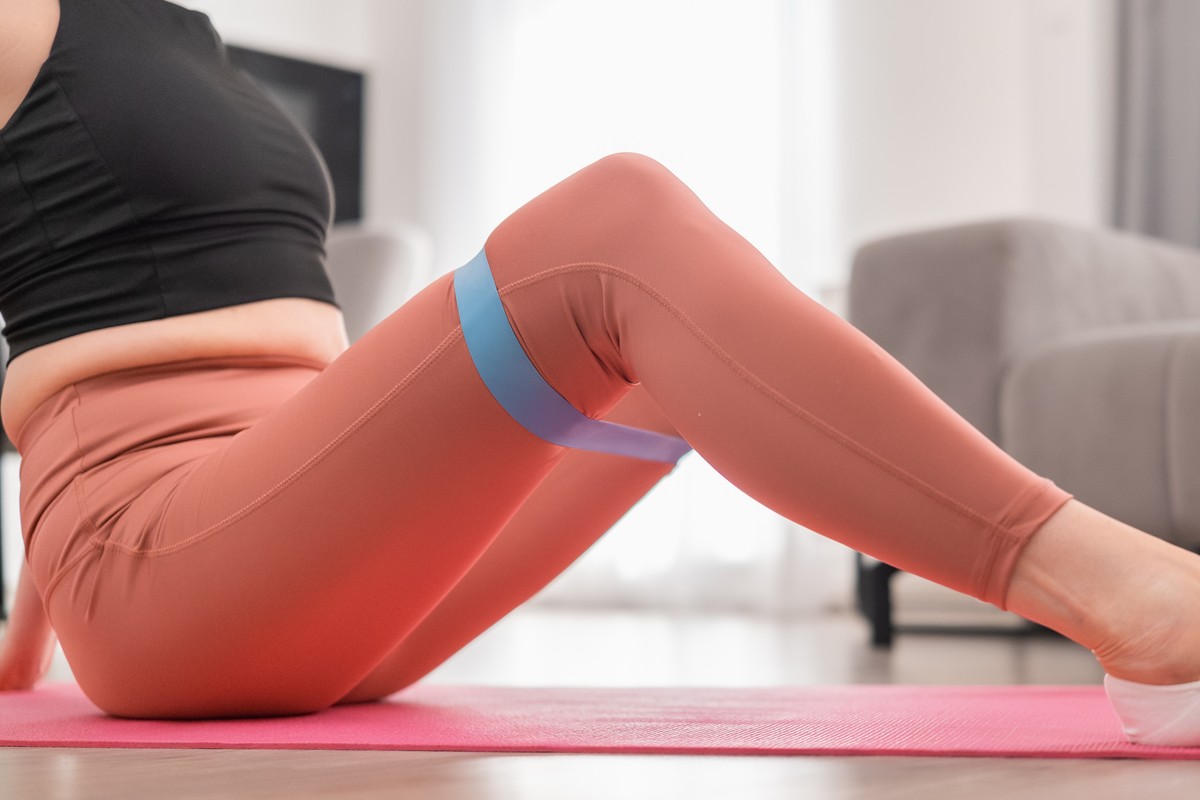
Gentler options like yoga, Pilates, or some easy stretching can help ease physical discomfort and support how you feel overall through this phase. The aim is to keep moving without piling extra stress onto a body that is already working through a hormonal shift.8
If you like strength training, this phase tends to suit moderate weights with higher reps rather than maximum loads. Holding steady and staying consistent are more realistic goals right now than pushing for new gains.9
Aiming for consistency over intensity
Adapting your movement to match your energy across the cycle is a practical, sustainable way to keep going. Picking a gentler activity instead of skipping movement altogether keeps the habit in place and supports how you feel day to day.10
Rest as a legitimate part of movement
On a day when fatigue or cramps are hitting hard, taking a rest day is a real training decision in its own right. Rest supports muscle repair, lowers your injury risk, and gives your body room to recover from what you have asked of it. Any effective routine runs on the same principle, that recovery should be in proportion to effort. Pushing through fatigue without enough rest can tip into overtraining and overexertion, which works against your progress over time.11
Planning rest into your routine is how your body repairs and gets stronger over time. Tuning into what your body needs on a given day, especially in the late luteal phase, tends to work better over the long run than a fixed schedule that ignores where you are in your cycle.12