
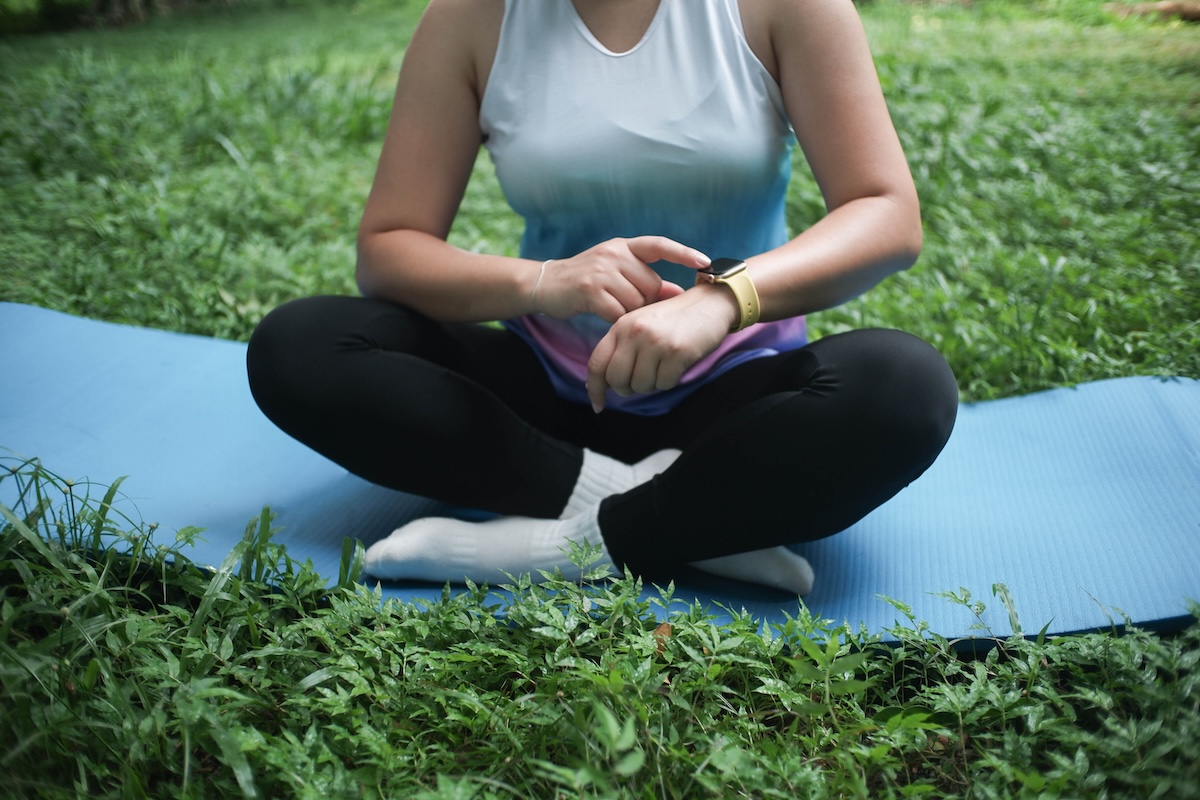
The heaviness in your legs during the first days of your period, or the unexpected lift of drive and energy mid-cycle, both could be linked to your hormones. They shift across the four phases of your cycle, and those shifts change how your body responds to exercise. Thinking about your movement and weight goals across the whole cycle, rather than holding one fixed intensity all month, can make exercise more effective and easier to keep up.
Why consistency across the whole cycle matters more than intensity
Whatever your cycle is doing, the baseline guidance stays the same. UK guidance suggests moving every day, spread across four to five days or daily, which lowers the risk of conditions like heart disease and stroke. The aim is at least 150 minutes of moderate activity, or 75 minutes of vigorous activity, each week. Across large groups, regular movement lines up with a much lower risk of major conditions like type 2 diabetes and heart disease, by up to 50%, and a lower risk of early death by around 20 to 30%. These come from large population studies, so they describe broad trends, and they point to steady, regular movement as the base you build everything else on.12
Even small additions to your daily movement add up, and picking activities you actually enjoy makes them easier to keep up. The same idea runs through your whole cycle. You can keep moving in a way that fits how you feel each week, easing off when you need to and leaning in when the energy is there.3
Phasing movement with your cycle
The research on matching exercise to exact cycle phases is still in its early stages, and what you feel can differ a lot from one week to the next, and from one person to the next. The phase-by-phase notes below come from popular wellness guidance rather than firm clinical rules, so treat them as a place to start noticing your own patterns.
The menstrual phase (approximately days 1 to 7)
During your period, oestrogen and progesterone sit at their lowest. Your energy can dip, and cramps can make harder sessions feel out of reach. Gentle, low-intensity movement like walking, yoga, or Pilates may help with how you feel here. You might find light activity lifts your mood when energy is low, though that shifts from one cycle to the next. If your symptoms are severe, resting is a fair choice too.4

The follicular phase (approximately days 6 to 14)
As oestrogen rises through the follicular phase, your energy and mood often start to lift. This can feel like a natural point to bring back more challenging cardio or resistance training. You might find you are ready to push a little harder, and some popular guidance points to this phase as a good time to build strength, though solid clinical evidence for that exact timing is still thin.5
Around ovulation (approximately days 14 to 17)
Around ovulation, oestrogen peaks and testosterone rises briefly too. You may feel at your strongest and most motivated here. Some guidance suggests this window suits higher-intensity sessions like HIIT or heavier strength work, though that comes from popular wellness thinking rather than confirmed evidence. It helps to follow how your body feels rather than sticking to a fixed plan.6
The luteal phase (approximately days 18 to 28)
In the luteal phase, progesterone rises, then both hormones drop before your period. Premenstrual syndrome (PMS) brings symptoms like fatigue, bloating, and irritability, which can make high-intensity sessions harder to keep up. Easing toward lower-impact movement like swimming, walking, or yoga may help with how you feel, though exercise on its own is not a treatment for PMS. If PMS is significantly affecting your daily life, it is worth speaking to your GP about the options available.7
Where strength training fits in your weight goals across your cycle
UK guidance suggests muscle-strengthening activity that works all the major muscle groups on at least two days a week, alongside your aerobic movement. It sits at the heart of the framework for adult health, so it is worth a place in your week.8
Strength training builds and keeps lean muscle. It is one reason body composition goals tend to respond better to a routine that includes regular strength work, alongside your cardio.9
You do not need a gym to begin. Bodyweight moves like squats and press-ups, resistance bands, or household items used as light weights all work. Sit-to-stands are a practical place to start if you are building from scratch.10
Why HIIT alone is not the full answer
High-Intensity Interval Training (HIIT) means short bursts of hard effort with recovery in between. HIIT can burn calories and reduce body fat in less time than steady-state cardio, and it earns a place in a varied routine. Leaning on HIIT as your only form of exercise has its limits, though.11
You may find that high-intensity sessions during your period or the late luteal phase feel especially demanding, and that gentler movement suits you better in those windows. UK guidance points to a varied mix of aerobic activity, muscle-strengthening work, and flexibility or balance training, rather than leaning on one type. Pairing HIIT with regular strength work and some flexibility practice gives you both the cardio benefit and the muscle-building effect that supports body composition over time.12