

If you have ever noticed the bloating that builds in the days before your period, or the cramping urgency that arrives when it starts, there is a hormonal explanation behind it. Oestrogen and progesterone shift how quickly food moves through your gut across your cycle, which changes how comfortable digestion feels from one phase to the next. Once you see how gut health, your cycle hormones, and what you eat connect, it gets clearer why your digestion changes week by week, and what can help.
How oestrogen and progesterone affect your gut
The constipation and tight, bloated feeling that tends to peak before your period comes largely down to progesterone. It rises during the luteal phase, the second half of your cycle after ovulation, and one of its effects is to relax smooth muscle. That slows the movement of food through your gut. When progesterone drops and prostaglandins kick in at the start of your period, things can speed up the other way, which is often behind the cramping and the looser stools or diarrhoea in the first day or two.1
The link runs both ways. Your gut bacteria may have a hand in how your body handles oestrogen. There is a group of microbial enzymes called the estrobolome, which are involved in breaking down oestrogen. This is an emerging area of science, and it is not yet part of mainstream UK dietary guidance, but it hints at why your gut may matter beyond digestion alone. Early findings also point to a possible link between gut microbiome disruption and oestrogen metabolism, though the evidence is still developing.2
Fibre as the nutritional foundation across the cycle
Whatever phase you are in, fibre is the most useful dietary tool you have for digestion. UK guidelines suggest 30g a day for adults, though most adults eat closer to 20g. Closing that gap regularly tends to matter more than any single food or supplement.5
Fibre adds bulk to your stools, keeps things moving regularly, and feeds the bacteria in your gut. In the luteal phase, when progesterone slows everything down and constipation creeps in, keeping fibre up from whole foods can help digestion stay regular. During your period, when looser stools are more common, soluble fibre in oats, bananas, apples, and carrots can soak up extra water and add bulk, which may take the edge off that pattern.6
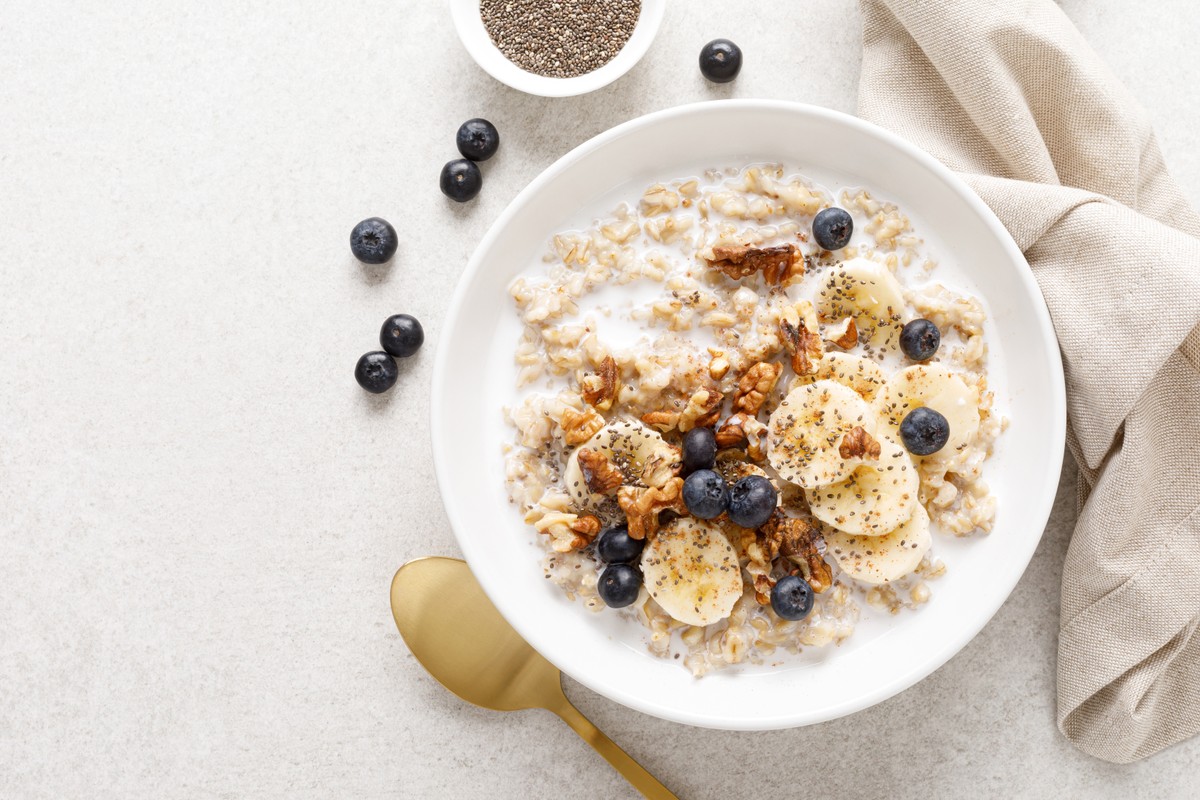
Good everyday sources of fibre include wholegrain cereals, wholemeal bread, wholewheat pasta, brown rice, potatoes with their skins, pulses such as lentils and chickpeas, nuts, seeds, fruit, and vegetables. Fibre needs fluid to do its job, so aim for around six to eight glasses of water a day.7
Prebiotic foods and why they matter for hormone balance
Prebiotics are types of fibre that act as food for the helpful bacteria in your gut. As those bacteria ferment them in your large intestine, they help produce short-chain fatty acids, which support your gut lining. You will find prebiotics in onions, garlic, leeks, asparagus, artichokes, chicory root, bananas, apples, and oats. Plenty of these double as everyday high-fibre foods, so a varied diet built around whole plant foods covers both at once.8
Feeding your gut bacteria with prebiotic foods may also have a bearing on the estrobolome, the microbial enzymes involved in handling oestrogen. 9
Fermented foods and the evidence so far
Probiotics are live bacteria and yeasts found in some foods and supplements, which may help keep your gut healthy. Fermented foods such as live yoghurt, kefir, kimchi, and miso may contain these live bacteria, though the amounts vary and processing like pasteurisation can destroy them. If you are picking a yoghurt for its probiotic content, look for a label that says 'live and active cultures'.10
There is some evidence that probiotics may help with the symptoms of irritable bowel syndrome, but for many other health claims the evidence is currently thin. In the UK, probiotics are regulated as food rather than medicine, so there is no rule that a product actually contains the amounts or strains of bacteria printed on the label. Early findings point to a possible link between certain probiotic strains and a reduction in premenstrual symptoms like low mood and anxiety, but this is at a very early stage and is not a sound basis for choosing a supplement.3411
When you are buying fermented foods, it is worth checking labels for salt in products like kimchi, and added sugar in flavoured yoghurts and drinks like kombucha. The gut benefits of these foods do not cancel out a high salt or sugar intake overall.12