

If the week before your period reliably brings a heavier kind of tiredness, cravings that are hard to ignore, and a mood that feels harder to steady, there is a reason that pattern keeps repeating. If your cycles are erratic and that window is harder to predict, you may still notice these shifts arriving even when the timing is less clear. When you have Polyendocrine Metabolic Ovarian Syndrome (PMOS), formerly known as PCOS, eating in the luteal phase complicates the pre-existing challenge around insulin and blood sugar. That combination can make the whole stretch feel more difficult to get through.
The luteal phase is the roughly two weeks between ovulation and your next period. Progesterone rises during this time, and the hormonal shift can bring premenstrual symptoms: mood swings, irritability, anxiety, fatigue, broken sleep, bloating, and food cravings. With PMOS, you may find these symptoms feel worse, and this is true whether your cycles run to a predictable pattern or not. If your cycles are irregular or hard to track, these shifts may arrive without much warning rather than in a clearly defined window. Low mood and anxiety often come up more in the days before a period, and if your mood symptoms feel severe or hard to function around at that time, it is worth raising with your GP.4
Why the luteal phase adds to the insulin challenge of PMOS
For a lot of people with PMOS, insulin resistance underpins all of these issues. Your cells respond less easily to insulin, so your body makes more of it to keep up. Those higher insulin levels push your ovaries to produce more androgens like testosterone, which can feed into irregular periods, acne, and unwanted hair growth.3
In the luteal phase you may notice you feel hungrier, with carbs and sweet foods harder to resist. As progesterone rises, your insulin sensitivity can dip for a while, and some nutritional specialists link this to the stronger cravings. It is still being studied rather than settled clinical consensus. If insulin resistance is already part of your baseline, blood sugar can become harder to steady and cravings can feel sharper in the days before your period. To understand how it plays out for you, a registered dietitian or your GP is a good place to start.5
How complex carbohydrates steady blood sugar in the luteal phase
Low glycaemic index (GI) carbohydrates, the ones your body digests slowly, are a useful anchor for PMOS across the whole cycle, and they matter even more in the luteal phase. Because they break down gradually, your blood sugar rises in a gentler way and your insulin response stays more measured. High-GI foods tend to spike blood sugar and then drop it, which is the swing you feel soon after.6
Low-GI options that slot into everyday meals include wholegrain bread, brown rice, porridge oats, quinoa, beans, lentils, and sweet potatoes. Foods worth keeping lighter on in this window include sugary drinks, cakes, biscuits, and white bread, which push blood sugar up fast and can leave your energy and mood dysregulated soon after.7
How you combine foods matters as much as which carbs you pick. When you pair carbohydrates with some protein and a little healthy fat, they absorb more slowly and your blood sugar stays smoother. Eating at regular intervals, say three meals and a couple of planned snacks across the day, also keeps blood sugar steadier and softens the sharp hunger that tips into cravings. This is a general pattern to lean on, and a registered dietitian can help you shape it around your own routine.2
What may help your energy and mood in this window
Adding some lean protein to each meal helps steady your blood sugar and leaves you feeling fuller and more satisfied afterwards. Fish, chicken, tofu, and lentils all work across different ways of eating, and keeping it regular matters more than the exact source.1
If the premenstrual days bring fatigue and muscle tension, magnesium-rich foods may take a little of the edge off. Dark leafy greens, nuts, seeds, and dark chocolate all contain magnesium. This is a general food suggestion rather than a PMOS-specific treatment, and it works best as part of an overall balanced way of eating.8
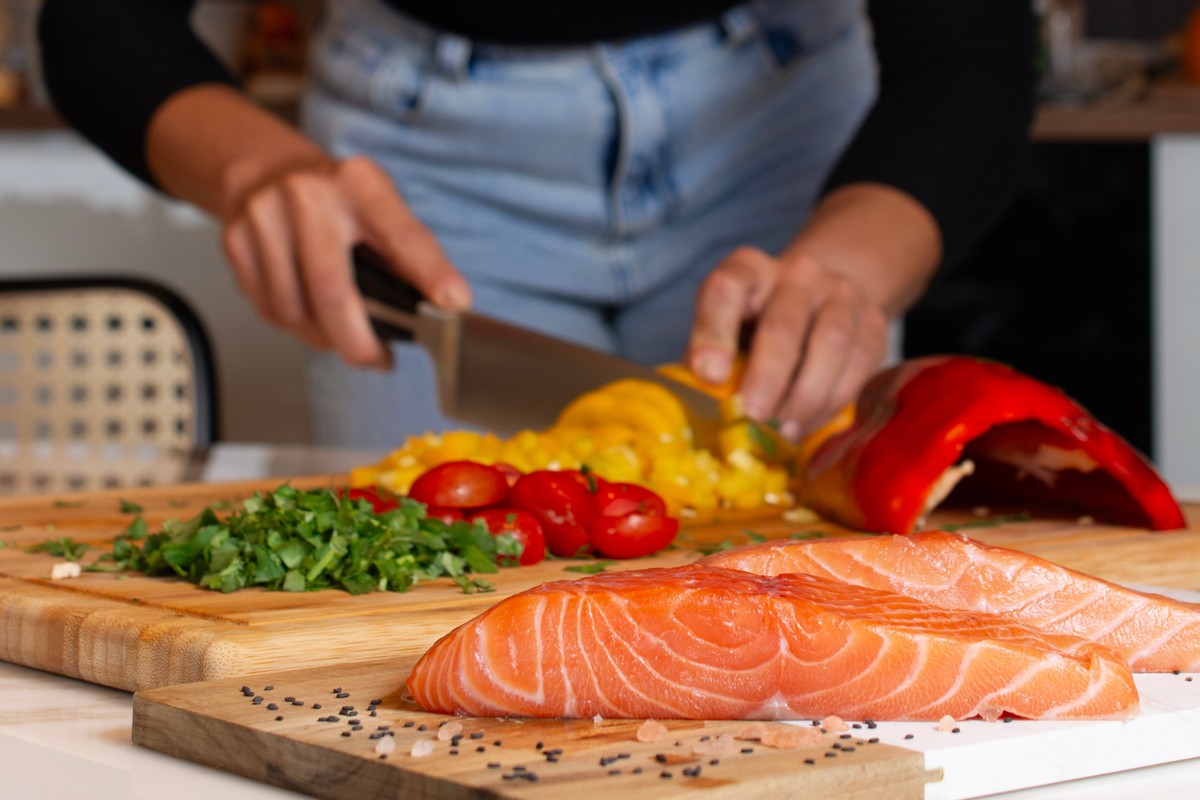
Omega-3 fats, found in oily fish like salmon and sardines, are linked to lower inflammation and turn up in a lot of PMOS food guidance. Tomatoes, kale, spinach, almonds, and olive oil all feed into an anti-inflammatory way of eating too. Easing the low-level inflammation that comes with PMOS may shape how you feel day to day, including through the luteal phase.9
Iron and heavy periods
If your periods are heavy, your iron is worth keeping an eye on. Low iron can add to the tiredness that already exists for a number of reasons in the luteal phase. Lean red meat, fortified breakfast cereals, beans, and dark green vegetables are all good sources. Pairing them with some vitamin C, like citrus fruit or a glass of orange juice, helps your body take in more of the iron.10
Putting luteal phase eating together in practice
Because PMOS often makes cycles irregular or unpredictable, you may not always know when you are in the luteal phase. The eating patterns below are worth holding to across the whole cycle rather than just in a defined window, with the understanding that they tend to matter most in the days before a period whenever that arrives. The whole approach leans on consistency: regular meals built around low-GI carbs, protein, and healthy fats, with a little attention to foods that may support your energy and ease inflammation. The aim is steadier fuel through a phase when PMOS already makes blood sugar harder to hold even, and when hormonal shifts can make cravings and mood harder to ride out.
Small, practical changes can shift things without a full overhaul of how you eat. Swapping white bread for a wholegrain version, stirring lentils or beans into a meal you already make, keeping nuts or seeds within reach for a snack, or making sure most meals include some protein are all easy places to start.