
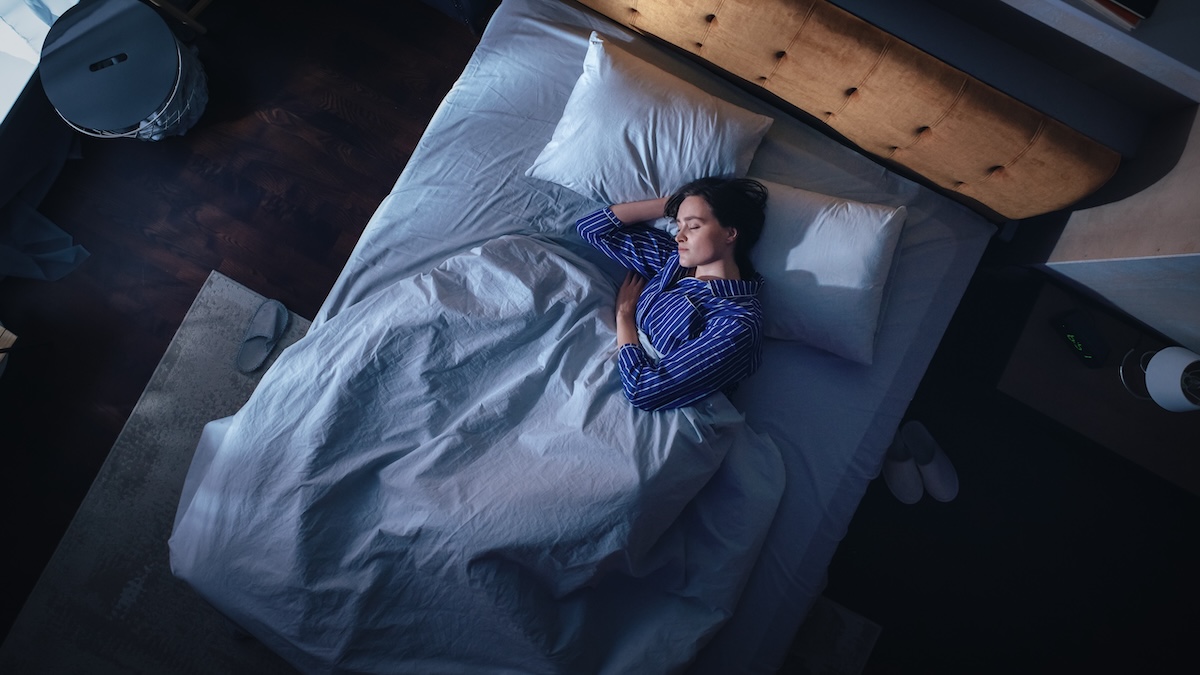
If your sleep feels different at certain points in your cycle, you are not imagining it. The hormonal shifts that happen across the month can affect how easily you fall asleep, how deeply you sleep, and how rested you feel. This varies from person to person, and not everyone notices a pattern, but for many people the connection between their cycle and their sleep is real and worth understanding.4
Sleep across the phases of your cycle
Your cycle is not one steady state. It moves through phases, and each phase has its own hormonal pattern and its own effect on how you sleep.
The follicular phase and why sleep tends to feel easier
The follicular phase runs from the end of your period until ovulation. As oestrogen rises steadily during these weeks, sleep quality often improves. Higher oestrogen levels help support REM sleep and maintain a lower core body temperature, which can make it easier to drift off and wake up feeling more rested.1
The late luteal phase and how progesterone affects sleep quality
After ovulation, progesterone rises. In the early-to-mid luteal phase, the calm, drowsy feeling you might notice partly comes from progesterone, whose by-products can settle you and support deeper sleep. The picture changes in the late luteal phase, the few days before your period arrives. Progesterone drops sharply here, and that drop often shows up as lighter sleep, more waking through the night, and that sense of not feeling rested no matter how long you were in bed.3
Tiredness and broken sleep are both common features of PMS, the cluster of symptoms that can build in the days before your period. Cramps can add to it, waking you or making it harder to settle. So if the week before your period feels like a run of broken nights, that fits the pattern of what PMS can involve.5
Body temperature, restlessness, and the luteal phase
Part of what disrupts sleep in the late luteal phase is temperature. Progesterone raises your core body temperature during this phase, and since your body settles into sleep more easily when it can cool down, that extra warmth can leave you feeling too hot, restless, or waking in the night. Keeping your bedroom cool and switching to lighter bedding in the second half of your cycle may help your body reach the temperature it needs to settle.6
Vivid dreams and changes in REM sleep around hormonal shifts
If your dreams feel more vivid or intense before your period, hormones may be shaping that too. The shifts across your cycle can affect your sleep stages, particularly rapid eye movement (REM) sleep, the stage where most dreaming happens. In the days before your period, you may get less REM sleep overall, yet find your dreams more vivid or emotionally charged. This points to how unsettled sleep becomes at this point in the cycle.7
What may help when hormones disrupt your sleep
When sleep feels harder to come by, a few steady habits can help. A consistent bedtime, a cool and dark room, and winding down the same way each night all support better sleep, especially when hormones are making it harder. These habits are worth keeping all month, though they may matter most in the late luteal phase, when the rise in body temperature makes settling more difficult.2
You may also find regular movement and balanced meals help with PMS symptoms, sleep difficulties among them. Consistency tends to matter more than the details of any one routine.8
Tracking your cycle to anticipate difficult nights
Keeping a symptom diary across two or three cycles can help you see whether your sleep troubles follow a pattern. Noting the nights you sleep poorly alongside where you are in your cycle gives you a clearer picture of whether hormones are a likely factor. It also helps you plan ahead, like building in more time to rest in the days before your period.9