

If you are a parent and you notice your sleep feeling more broken or restless in the days before your period, there may be two things happening at once. The natural sleep disruptions that come with parenting and the hormonal shifts of the late luteal phase can occur at the same time, and for some people that combination feels more draining than either would on its own. Understanding why can make it easier to be kind to yourself during this window.
Why the late luteal phase is already hard for sleep
Tiredness and trouble sleeping in the week before your period are a known part of PMS. They build through the late luteal phase and often linger into the first few days of bleeding. Busy, stressful days add to it, and there is also a hormonal reason underneath.4
Progesterone, the hormone with a calming, sleep-friendly effect, drops sharply in the days before your period. As it falls, settling down and staying asleep can both get harder. Your body temperature also rises a little during the luteal phase, and your body needs to cool down to fall asleep. That extra warmth can make it harder to drop off and can wake you more often through the night.1
Physical symptoms add to it. Cramps, bloating, and headaches all make rest harder to come by. The emotional side matters too. Anxiety and low mood are both common in the late luteal phase. They can chip away at the quality of the sleep you get, even when you have the chance to rest.5
How parenting makes those nights harder still
In the late luteal phase, your sleep tends to be lighter and more broken than at other points in your cycle. So when your child wakes in the night, it comes at a time when your own sleep is already unsettled. Dropping back off after being woken fully is harder now than it might be a week or two earlier, which means every wake-up costs you more.2
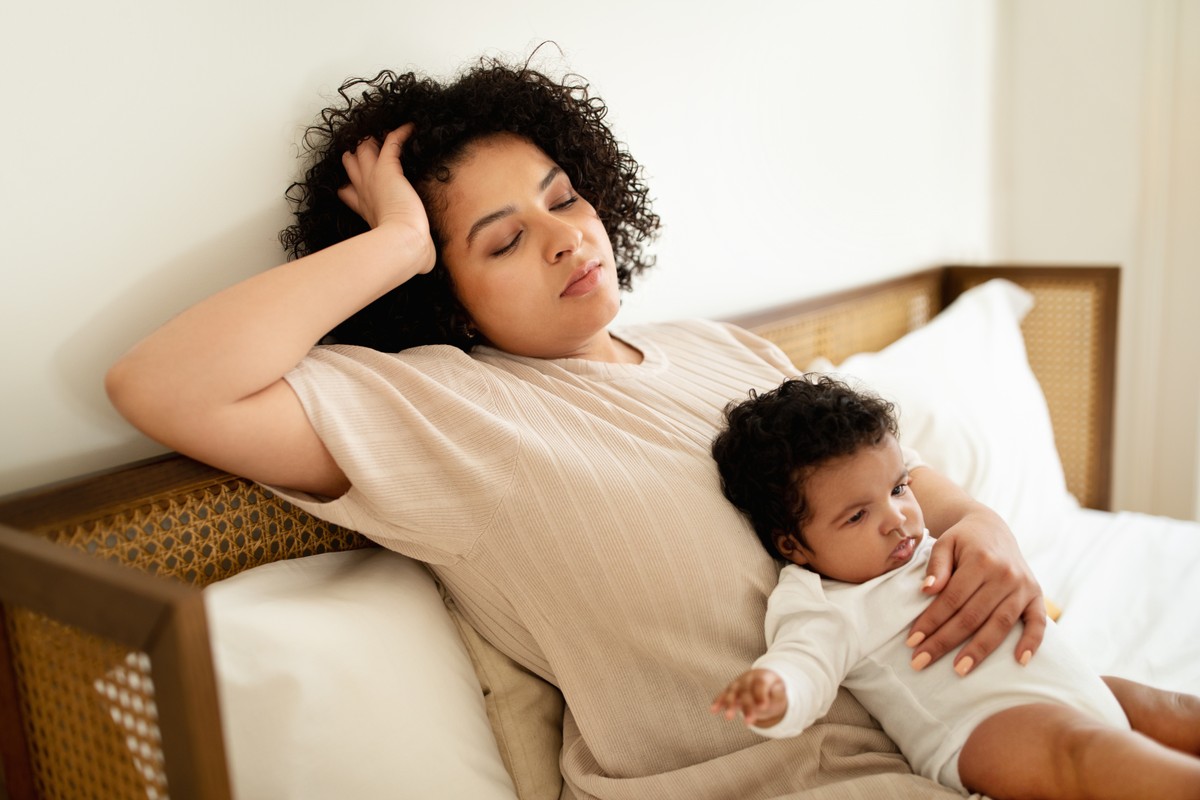
The usual advice to nap when your child naps gets less reliable too. The hormonal push against sleep before your period can mean that even when a window to rest opens up, dropping off is genuinely hard. If you have lain down exhausted and still could not sleep, that fits with how PMS affects your body's readiness to rest.6
If you are breastfeeding, you may notice your baby waking more often before your period. You may find that the hormonal shifts at this point briefly change your milk supply or its taste. This is not firmly documented in clinical guidance, so if you have any concerns about feeding or notice changes, your health visitor or midwife is the right person to talk it through with.7
Small adjustments that can help
The everyday steps that ease PMS symptoms more broadly can help your sleep too. Gentle exercise, a balanced diet, and easing stress where you can, through movement, breathing, or something like yoga, all support your body in the premenstrual week. These are options to try when you have space for them.8
In the week before your period, the basics of sleep hygiene tend to matter even more. A steady bedtime, less screen time in the evening, and a cool bedroom can all help offset the rise in body temperature that makes settling harder. A warm bath taken well before bed can support your body's natural cooling, and gentle stretching can ease the ache of cramps.3
How tracking your cycle helps
Tracking your cycle, even loosely, can change how these harder weeks feel. Once you can see that a run of poor nights tends to cluster in the late luteal phase, it becomes a pattern you can expect each month. That makes it easier to plan lighter days around that window where you can, and to go easier on yourself when sleep has been broken.9
Keeping a symptom diary across two to three cycles can help you spot your own pattern. If PMS symptoms, including poor sleep, are taking a real toll on your daily life, it is worth raising with your GP. Premenstrual Dysphoric Disorder (PMDD), a separate condition diagnosed clinically and distinct from PMS, can feel much more intense. If your symptoms feel that severe or hard to manage, your GP can look at whether more support would help.10