
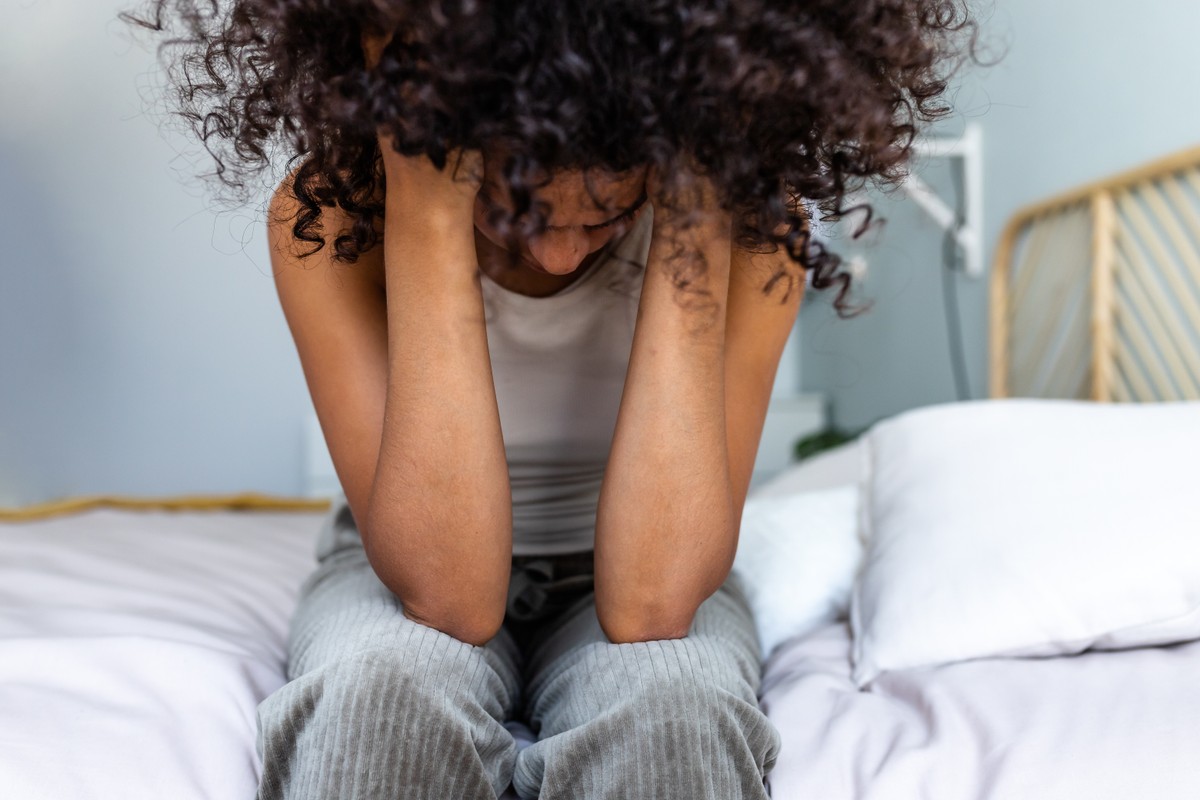
If you get headaches in the days before your period, you are probably already familiar with the pattern. The dull, throbbing pressure, the nausea, the sensitivity to light that makes a normal day feel like a lot. What is less well known is how directly hormonal fluctuation is behind this. Migraines are three times more common in women than in men, and the drop in oestrogen just before your period is one of the main reasons for that difference. Understanding what is behind it can make it easier to manage and easier to talk through with a GP.1
What oestrogen has to do with hormonal headaches around your period
Just before your period begins, oestrogen drops sharply, and that is the main reason period-related headaches happen when they do. Oestrogen plays a role in how much serotonin your body can draw on, and serotonin is involved in how your body regulates pain. When oestrogen falls, that pain threshold lowers with it. If your headaches tend to arrive in the two days before your period or the first three days of bleeding, that is most likely what is behind them.10
Headaches can show up at other points in your cycle too, including around ovulation or during the pill-free interval if you use combined hormonal contraception. The reasons behind them and how to manage them can differ depending on when they arrive.11
Hormonal headache vs menstrual migraine: a useful distinction
Hormonal headache covers any headache linked to hormonal shifts across your cycle. Menstrual migraine is more specific, it means migraine attacks that occur around the time of your period, typically in the window from two days before bleeding starts to three days into it.12
Within menstrual migraine there are two subtypes. Pure menstrual migraine (PMM) only happens in that perimenstrual window, with no attacks at other points in your cycle. Menstrually related migraine (MRM) happens around your period but also at other times of the month. It matters which one you have because it shapes what a GP is likely to suggest. Attacks around your period tend to last longer, feel more severe, and respond less readily to treatment, which is why specific management options exist for people whose attacks follow a predictable pattern.13

Tracking your pattern
Two to three months of tracking when headaches occur is one of the most useful things you can bring to a GP appointment. It gives a much clearer picture of what is happening than trying to recall it from memory, and helps confirm whether your headaches are genuinely tied to your cycle. Try to note the following each day:14
- Date and time the headache started
- How long it lasted
- Severity, using a simple scale such as 1 to 10
- Associated symptoms, for example nausea, light sensitivity, or visual changes
- Where you are in your menstrual cycle
- Any medicines you took, recorded as information for your GP rather than as a prompt to self-medicate15
What tends to help
Lifestyle measures in the perimenstrual window
In the days leading up to your period, some basics can make a real difference. Staying hydrated, eating regularly to avoid blood sugar dips, keeping sleep consistent and managing stress are all worth paying attention to in that window. If your headaches are frequent or severe they are unlikely to be enough on their own, but they can take the edge off alongside whatever else you are doing.3
Acute treatment options
Once a menstrual migraine has started, anti-inflammatory medicines (NSAIDs) and triptans are the recommended first options. Naproxen is available over the counter in the UK and a pharmacist can advise on how to use it. Mefenamic acid and triptans are prescription-only, so your GP can talk through whether either is right for you. If you are outside the UK, availability varies and a local healthcare provider can guide you.416
If your attacks are frequent and follow a predictable pattern, a GP may talk through short-term preventive treatment, sometimes called mini-prophylaxis. This involves taking a prescription medicine such as frovatriptan, naratriptan, or zolmitriptan in the days around your expected headache window. This is a GP-prescribed option and not something to start independently.917
Lifestyle and nutrition support
Some of the most effective support for hormonal headaches is built into how you eat and live day to day, rather than just how you manage them when they arrive. Magnesium has reasonable evidence behind it for reducing the frequency of hormonal headaches. It is found in dark leafy greens, nuts, seeds and dark chocolate, and is also available as a supplement. Worth mentioning to your GP if you are considering supplementing. Riboflavin (vitamin B2) has also been studied for migraine prevention with some positive findings. It is found in eggs, dairy, meat and fortified cereals. Blood sugar stability matters more than many people realise in the premenstrual window. Skipping meals or going long periods without eating can lower the threshold for a headache. Eating regularly and keeping your meals balanced in the days before your period is worth prioritising. Hydration is one of the more straightforward things to get right, though it is worth knowing that water alone is not always enough. Electrolytes, found in foods like bananas, leafy greens and nuts, or in electrolyte drinks, help your body retain and use fluids properly. Sleep disruption is a known headache trigger. Keeping a consistent sleep and wake time throughout your cycle, where you can, reduces the chance of a headache being triggered. Stress and tension can compound hormonal headaches. Gentle movement, breathwork, or whatever helps you decompress in the days before your period is worth building in where possible.518
When to speak to a GP
It is worth speaking to a GP if any of the following apply to you:
- Your headaches are very severe or getting progressively worse
- You have headaches on more than 15 days per month
- Your headaches do not respond to over-the-counter pain relief
- You experience neurological symptoms such as aura lasting more than 60 minutes, limb weakness, or speech difficulties
- You take pain relief for headaches on 10 or more days per month
- You are unsure whether your contraception is appropriate given your headache pattern19
A GP can refer you to a specialist headache clinic or neurologist if your diagnosis is uncertain, if preventive treatment has not helped, or if an underlying cause needs to be ruled out.7
If you are building a picture of your headache pattern, two to three months of diary entries is a practical starting point before your GP appointment. Bringing that record with you will give your GP a clearer view of what is happening and help them identify the most appropriate next step.