

When staying active feels harder than it used to in menopause, it is not only about motivation. Your joints might ache in the morning. A tiredness can sit in you no matter how much you slept, and your body simply protests more than it once did. Joint and muscle pain are common in menopause, linked to falling oestrogen, which affects inflammation and how your body senses pain. Fatigue is also a recognised menopausal symptom, driven by hormonal shifts that can disrupt sleep and affect mood.6
Stretches of low activity during menopause are common. They happen because your body is changing in ways that make the effort genuinely greater. The aim is to find a level of movement you can sustain right now, at the pace your body is working at today.
Why movement still matters, even when it is harder
Regular movement can help ease a range of menopausal symptoms, including hot flushes and low mood, while supporting your heart and your bones. Regular, doable movement you can keep up over time is the aim here.7
Falling oestrogen during menopause can lead to a drop in bone density, which raises the risk of osteoporosis and the fractures that can come with it. Keeping some weight-bearing and strengthening activity in your routine matters here, especially if you have an osteoporosis diagnosis. Osteoporosis is a long-term condition, and exercise is one ongoing part of supporting your bone health over time, rather than a cure or a one-off fix.1
Staying active in menopause, joints and all
Low-impact, weight-bearing movement like brisk walking can help protect your bone density and keep your joints mobile. It needs no equipment, you can break it into shorter chunks, and it is easy to adjust on days when pain or tiredness is higher. A ten-minute walk still counts, and that is a reasonable place to start when you are coming back to movement after a quieter stretch.8
Yoga and tai chi are gentle, low-impact options that may help with the mood changes that come with menopause, while building strength and flexibility. Both bend to fit your day: you can join a class, follow a guided video at home, or move through a few familiar postures when time or energy is short.9
Gentle Pilates is often suggested for joint mobility, strength, and body awareness. It leans on controlled movement rather than hard cardio effort, which can make it easier to manage on days when fatigue is heavy.2
Somatic movement practices focus on slow, internally led movement to release tension and tune into how your body feels. They can be useful in stretches when more structured exercise feels out of reach. They sit alongside weight-bearing activity rather than replacing it, and they can help you keep a habit of movement going when your energy is low.
Resistance exercise and bone health
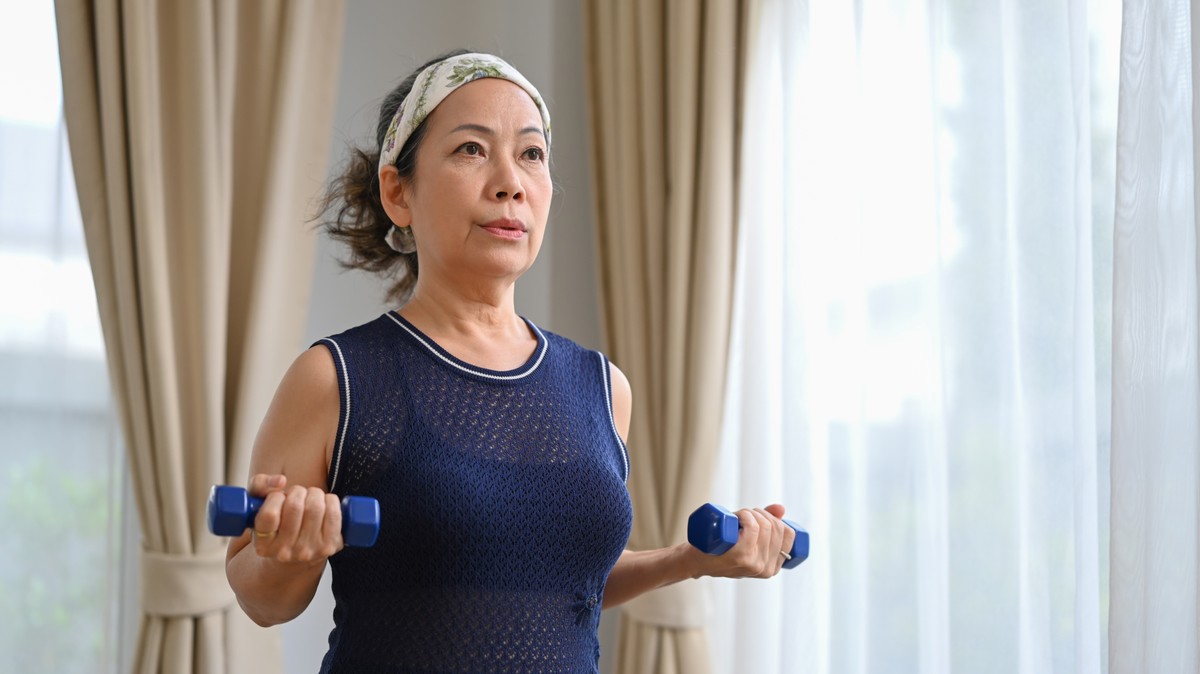
Pairing weight-bearing exercise, such as walking or dancing, with muscle-strengthening resistance work helps support your bone health during menopause. Bodyweight exercises, resistance bands, and carrying loaded bags all count as resistance work. The idea is that muscles pulling on bones during load-bearing activity gives your bones a stimulus that helps keep them strong.3
If you have osteoporosis, some forms of resistance and impact exercise may need tailoring to lower the risk of fracture. Your GP or a physiotherapist can advise on what suits your level of bone density.
Building back from a low-activity period without pressure
Starting with short, ten-minute bouts of gentle activity and building up gradually is a practical way back into exercise. You do not need to reach a previous level of fitness quickly, or at all. Your body's capacity shifts across the menopausal transition, and movement at this stage may simply look different.5
Staying as active as your pain and fatigue allow, and putting regular movement ahead of intensity, fits most closely with how menopausal symptoms actually behave. Some days will feel better than others. A shorter or gentler session on a harder day keeps the habit going without adding physical or mental cost.4
Consistency over intensity
Consistency serves you better than intensity at this stage. Movement that happens regularly at a manageable level adds up to more over time than the odd high-effort session followed by exhaustion or pain. This is a realistic standard for a phase of life when the physical cost of activity is genuinely higher.
If symptoms like joint pain, fatigue, or low mood are persistent or severe, raise them at your next GP appointment. Exercise can support how you manage symptoms as part of a wider approach, though it does not stand in for medical care.