
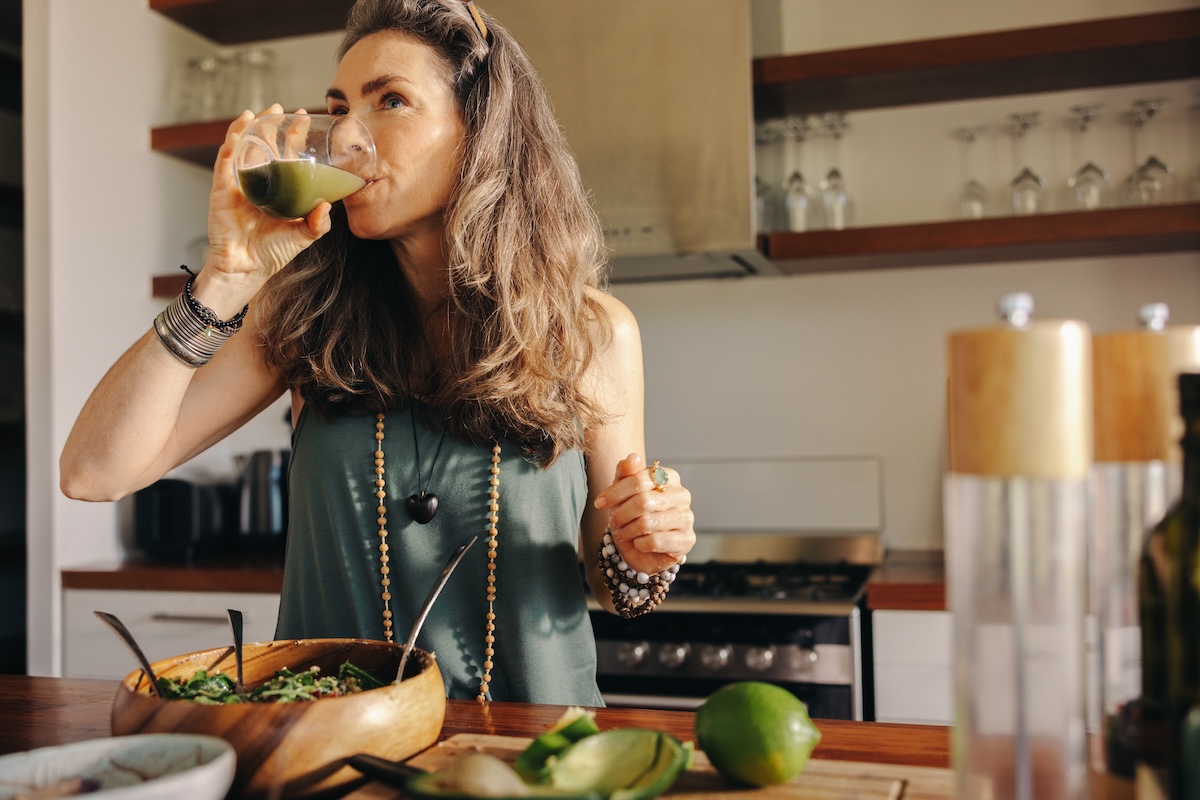
If your digestion has felt slower since menopause, and you are noticing stools that are harder to pass or longer gaps between bowel movements, there may be a reason behind it. After menopause, your oestrogen settles at a lower level, and this shift can line up with changes in how your gut moves and in the balance of bacteria living in your digestive system. Knowing what is happening, and the food changes that can help, is a practical place to start.
Constipation after menopause
Some women notice that constipation becomes more of a problem during midlife and after menopause. Hormonal changes may play a part, but research has not yet established that falling oestrogen or progesterone directly slows the bowel. Bowel habits can also be affected by ageing, stress, physical activity, diet, fluid intake, medicines, health conditions and changes in pelvic-floor function.12
Constipation usually means fewer than three bowel movements a week, hard or lumpy stools, and straining to go. This is often because gut motility, the muscular action that pushes food through your digestive system has slowed, meaning that waste sits in your colon for longer. More water gets drawn out of it, which leaves stools harder and more difficult to pass. If you notice these, it is worth raising with your GP, especially if it is a change from your usual pattern.6
What happens to gut microbiome diversity post-menopause
Your gut holds trillions of bacteria, and together they make up your gut microbiome. The low oestrogen levels that stay with you after menopause can lead to a drop in how varied these bacteria are. A less varied microbiome tends to be less resilient, and that drop can tip the balance of bacteria, something sometimes called dysbiosis.3
Newer research points to a group of gut bacteria sometimes called the estrobolome, which may help process and regulate your oestrogen. These bacteria make an enzyme that lets some oestrogen move back into your bloodstream. When your microbiome is less varied, that process may work less smoothly. This is still being studied, so it is best read as early science rather than settled fact.4

Why fibre matters for gut health after menopause
Fibre moves through your digestive system mostly undigested until it reaches your large intestine. There it adds bulk to stools and gets fermented by your gut bacteria. This may help keep bowel movements more regular and produces helpful compounds called short-chain fatty acids, which support a healthy gut.5
The recommended daily intake for adults in the UK is 30g of fibre. Most adults eat well under that.8
You will find fibre in wholegrain cereals like porridge and bran flakes, wholewheat pasta, wholemeal bread, nuts, seeds, fruit, vegetables, and pulses such as beans and lentils.9
Different types of fibre
Fibre is often grouped into soluble and insoluble types, although many foods contain a mixture and different fibres behave differently in the gut. Some soluble, gel-forming fibres found, in oats, nuts, apples, and beans, soaks up water to form a gel that softens stools. Insoluble fibre, in wholegrains and bran, adds bulk. It helps to build your fibre up slowly rather than all at once. If you are already constipated, a quick jump in insoluble fibre can sometimes make bloating worse.10
Fermented foods, live cultures, and microbiome diversity
Fermented foods carry live microorganisms that may support a healthy gut. Natural yoghurt, kefir, kimchi, and sauerkraut all hold live cultures. However, the quantity can vary greatly depending on how they are made. Mixing a few of these into your week may help support the balance of bacteria in your gut.11
Prebiotics are a type of fibre that feed your helpful gut bacteria and encourage them to grow. You will find them in onions, garlic, bananas, and artichokes. Eating a wide range of plant foods across the week can help keep your microbiome varied, though there is no set number for plant variety in UK dietary guidance.13
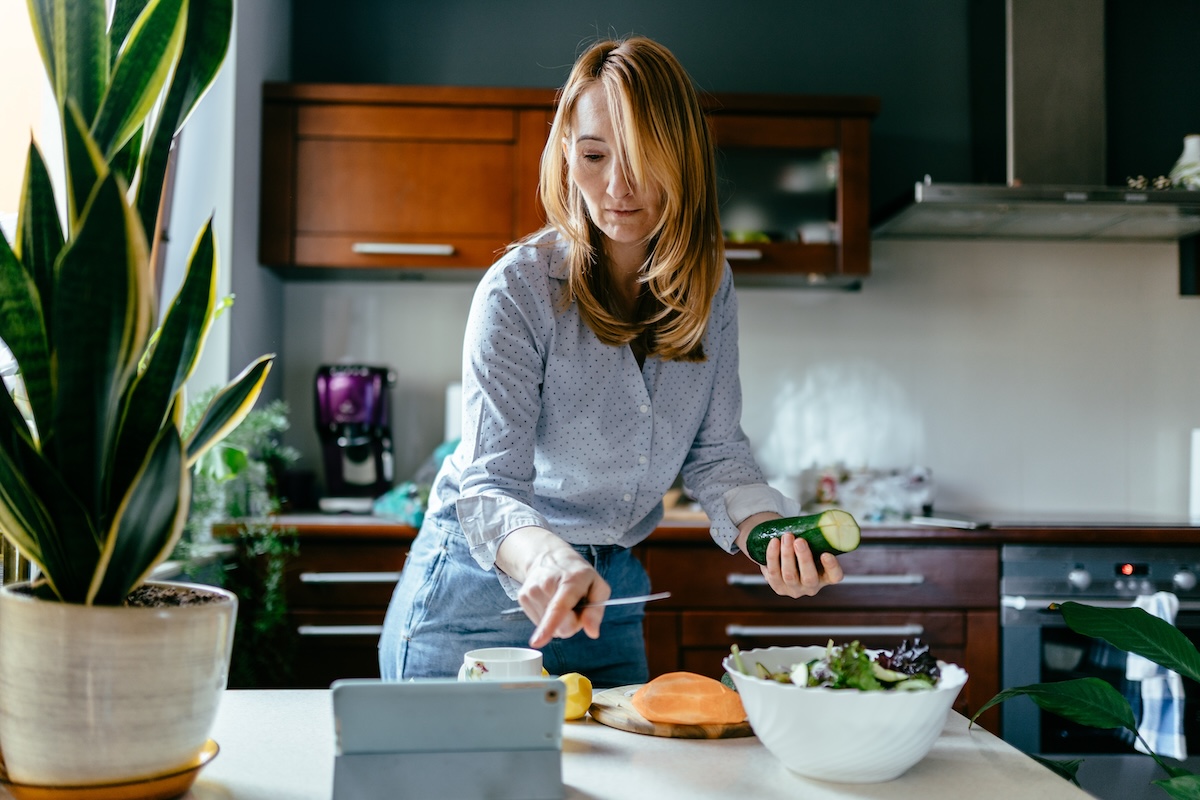
Research into how live cultures and prebiotic foods affect gut symptoms around menopause is still developing. For now, the evidence treats these foods as part of a healthy, balanced diet rather than a targeted fix, and it remains a promising but early area of nutrition science.12
Putting it into practice
Raising your fibre, keeping your fluids up, and working fermented foods into your regular meals are the main food changes for gut health after menopause. These sit alongside staying active, which also helps your gut keep moving.7
- Aim for 30g of fibre a day from a mix of wholegrain, fruit, vegetable, and pulse sources.
- Build fibre up slowly.
- Keep your fluids up through the day to help fibre work on stool consistency.
- Include fermented foods like yoghurt, kefir, kimchi, or sauerkraut regularly.
- Add prebiotic-rich foods such as onions, garlic, bananas, and artichokes to your meals.
- Stay active, since this also helps your gut keep moving.