

After menopause, a familiar kind of fatigue or heaviness can settle in, and it can feel natural to put those shifts down to hormones alone. Something quieter may be changing too. As oestrogen falls, it can affect how your body manages cholesterol and supports the health of your blood vessels, which is what makes heart health a real priority in how you eat now. Before menopause, women tend to have a lower risk of coronary heart disease than men of a similar age. After it, that gap narrows. The food choices here can help address several of the factors involved in that change.1215
Why cardiovascular risk shifts after menopause
Oestrogen does a lot of quiet work for your heart. It helps keep cholesterol in check and your blood vessels healthy. As levels fall, LDL cholesterol, often called the 'bad' kind, can rise, and fat can start to build up in your arteries and narrow them. Over time, this raises the risk of higher cholesterol and cardiovascular conditions like heart disease and stroke in the years after menopause.316
A few other shifts around this time add to the picture including ageing, body composition, diet and activity. You may notice weight settling more around your middle, your blood pressure creeping up, or your body handling blood sugar less smoothly than before. Together, these changes make the years after menopause a time when what you eat can genuinely make a difference.45

Oily fish and omega-3 in a heart health menopause diet
Oily fish is rich in long-chain omega-3 fatty acids, which can help keep your heart healthy and may help reduce the risk of heart disease. The two forms found in fish, EPA and DHA, can help protect your heart in several ways: lowering triglycerides (a fat in your blood), and may also have small beneficial effects on blood pressure and blood-vessel function, although these effects depend partly on the amount consumed.678
A good aim is at least two portions of fish a week, with at least one of those being oily. A portion is around 140g fresh or one small can of oily fish. Salmon, sardines, pilchards, trout, herring, and mackerel all work well, and fresh, frozen, and tinned all count. One thing worth knowing: fresh tuna counts as oily fish, but tinned tuna does not, because the oils are taken out during canning.917
If you eat plant-based, you can get omega-3 in the form of ALA (alpha-linolenic acid) from flaxseed, chia seeds, walnuts, and rapeseed oil. Your body only turns a small amount of ALA into the EPA and DHA found in fish, so plant sources on their own give you less of the active forms.18
Fibre and keeping cholesterol in check
The daily target for adults is 30g of fibre, and most of us fall short of it. Eating plenty of fibre lines up with a lower risk of heart disease, and one type in particular, soluble fibre, has a direct hand in managing cholesterol.10
You will find soluble fibre in oats, barley, pulses, and some fruits and vegetables. It dissolves in your gut into a gel-like substance that binds to cholesterol and reduces how much gets absorbed into your blood. Oats and barley contain a particular form called beta-glucan. Around 3g of beta-glucan a day can help lower cholesterol. A standard 40g bowl of porridge gives you about 1.4g, so pairing oats with other beta-glucan sources across the day helps you build toward that amount.1119
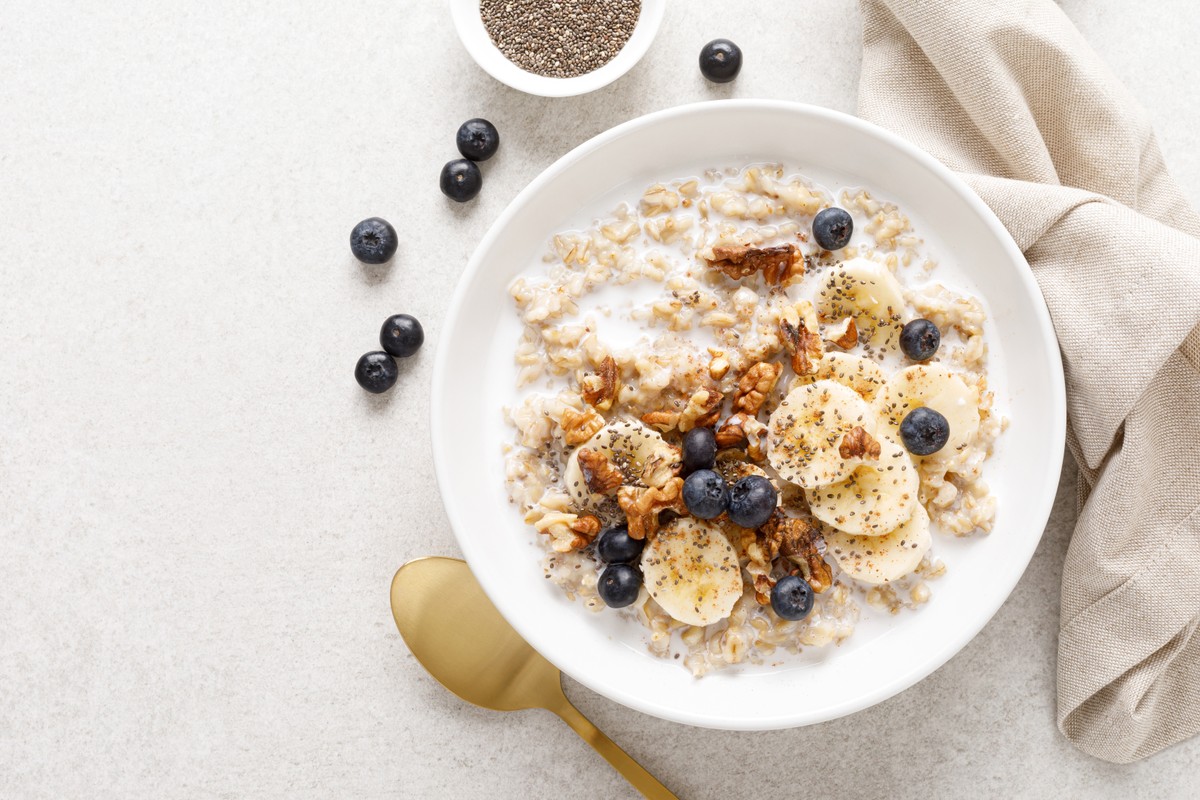
Good everyday sources of cholesterol-lowering fibre include wholegrains like porridge, brown rice, and wholemeal bread, pulses like lentils, beans, and chickpeas, and a wide mix of fruits and vegetables.20
Plant sterols and stanols: what the evidence supports
Plant sterols and stanols turn up naturally in small amounts in plant foods, including grains, vegetables, fruits, nuts, and seeds. They have a structure much like cholesterol, and they work by blocking cholesterol from being absorbed in your gut, which lowers the amount of LDL cholesterol in your blood.21
The amounts in everyday food are too small to shift your cholesterol much on their own. Consuming between 1.5g to 3g a day through foods fortified with plan sterols and stanols can lower LDL cholesterol by 7% to 12.5%. Fortified options like mini-yogurt drinks, fat spreads, and milks, are all easy to find in supermarkets.1222
Building a consistent heart-supportive diet
None of these pieces works alone. A way of eating that regularly includes oily fish, builds fibre from wholegrains, pulses, and vegetables, and keeps LDL cholesterol in check through soluble fibre and, where it suits you, fortified foods, gives your heart steady support through the years after menopause. The foundation is variety and consistency, rather than any single food.
If you are worried about your cholesterol or heart health, your GP can arrange a blood test and talk through what comes next, including whether seeing a registered dietitian would help.