
You reach postmenopause, and then someone mentions, maybe at a routine appointment or over coffee with a friend, that your heart health matters more now. If you do not quite know what that means in practice, the idea can land with a quiet weight. Heart health after menopause is something to understand, and there are a few specific steps that can genuinely make a difference. Think of it as a prompt to notice what is shifting in your body.
What oestrogen was doing for your cardiovascular system
Before menopause, oestrogen looks after your cardiovascular system in the background. It helps keep your blood vessels flexible and healthy, and it helps keep your cholesterol in balance.4
After menopause, oestrogen settles at a much lower level, and some of that protection eases off. Your arteries can become stiffer and narrower as fatty deposits build up more easily along the vessel walls. This is the main reason your cardiovascular risk shifts once you are through menopause.5
Three areas where the change shows up
This drop in oestrogen touches three parts of your heart health in particular: your cholesterol, your blood pressure, and your metabolic risk.6
Cholesterol
After menopause, your cholesterol can creep up. Your LDL cholesterol, sometimes called the "bad" kind, may rise, while your HDL cholesterol, the "good" kind, may drop. That leaves the overall balance less favourable for your heart. A simple cholesterol check with your GP or practice nurse gives you a clear picture of where yours sits.3
Blood pressure
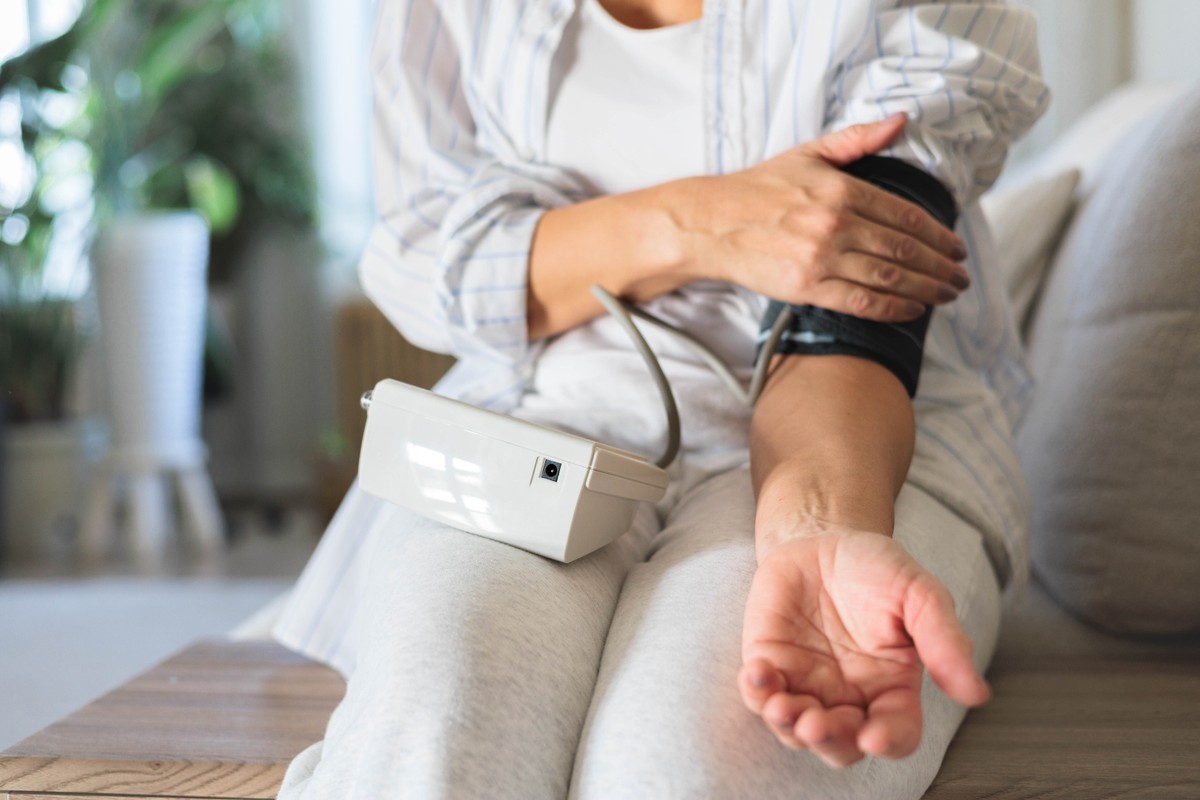
Your blood pressure can also rise after menopause. Oestrogen helps your blood vessels stay relaxed, so as it falls, those vessels can stiffen, and that stiffness nudges your blood pressure up over time. Blood pressure is one of the more straightforward things to keep an eye on and manage, so having it checked regularly is a practical priority.2
Metabolic risk
Menopause also changes how your body stores fat, and you may notice more settling around your middle. This kind, called visceral fat, sits around your internal organs. Alongside shifts in how your body handles glucose (your blood sugar), it raises the chance of a cluster of conditions, sometimes grouped together as metabolic syndrome, that lift your overall risk of heart disease. This is part of why changes to how you move and eat carry real weight at this stage.7
Practical lifestyle steps that support heart health in menopause
Movement
Aiming for at least 150 minutes of moderate-intensity activity a week is the usual guide. Moderate means you are breathing faster and feeling warmer, but can still hold a conversation. A brisk walk or a cycle both count. Adding some strength work on two days a week supports your muscle and your metabolic health. This does not have to mean a gym. Bodyweight moves, resistance bands, and carrying heavy shopping all build strength.1

Nutrition
A Mediterranean-style way of eating has strong evidence behind it for your heart. In practice, that means building meals around fruit, vegetables, wholegrains, fish, and healthy fats like olive oil. Cutting back on saturated fat, added sugar, and salt matters too. A lot of salt links directly to raised blood pressure, so checking labels and easing off processed food is a simple lever worth pulling.8
HRT and heart health: what the evidence says
Hormone replacement therapy (HRT) is prescribed to ease menopausal symptoms. It is not given purely to protect your heart, and it is not something to look to mainly as a heart treatment.9
That said, if you start HRT around the time of menopause, before 60 or within ten years of your last period, it does not raise your cardiovascular risk. Evidence suggests it may even line up with a lower risk of coronary heart disease.10
The form your HRT takes matters too. Transdermal HRT, absorbed through patches or gels on your skin, does not carry an increased risk of blood clots. Some oral forms of oestrogen sit differently here. It is a useful detail to bring up when you talk through your options with your GP.11
When and how to raise this with your GP
Your GP or practice nurse can check your blood pressure and cholesterol, talk through your own cardiovascular risk, and walk you through lifestyle changes and treatment options, including HRT. You do not need to wait for something to feel wrong before you have this conversation. Bringing it up yourself at a routine appointment is completely reasonable.12