Your skin may feel drier than it used to. A blemish or a scratch takes longer to settle. The texture has shifted, and it catches the light differently. Your hair might feel finer, or you notice more of it coming away when you brush. During menopause, falling oestrogen affects your skin and hair in direct ways, and understanding what is happening can help you make sense of what your body is doing.
How falling oestrogen changes your skin
When your skin feels drier, itchier or more easily irritated, oestrogen is often part of the story. It drives collagen production, which gives your skin its strength and stretch, and it helps your skin make its own natural hydrators, including hyaluronic acid. When oestrogen falls and stays low, both of those jobs slow down. Your skin can become drier, thinner, more sensitive, and slower to repair.3
Collagen loss tends to speed up in the early years after menopause, then continues more slowly after that. Over time, your skin becomes thinner and less springy. How fast this happens, and how much you notice it, varies from person to person, though the direction of the change is fairly consistent.1
What causes hair thinning?
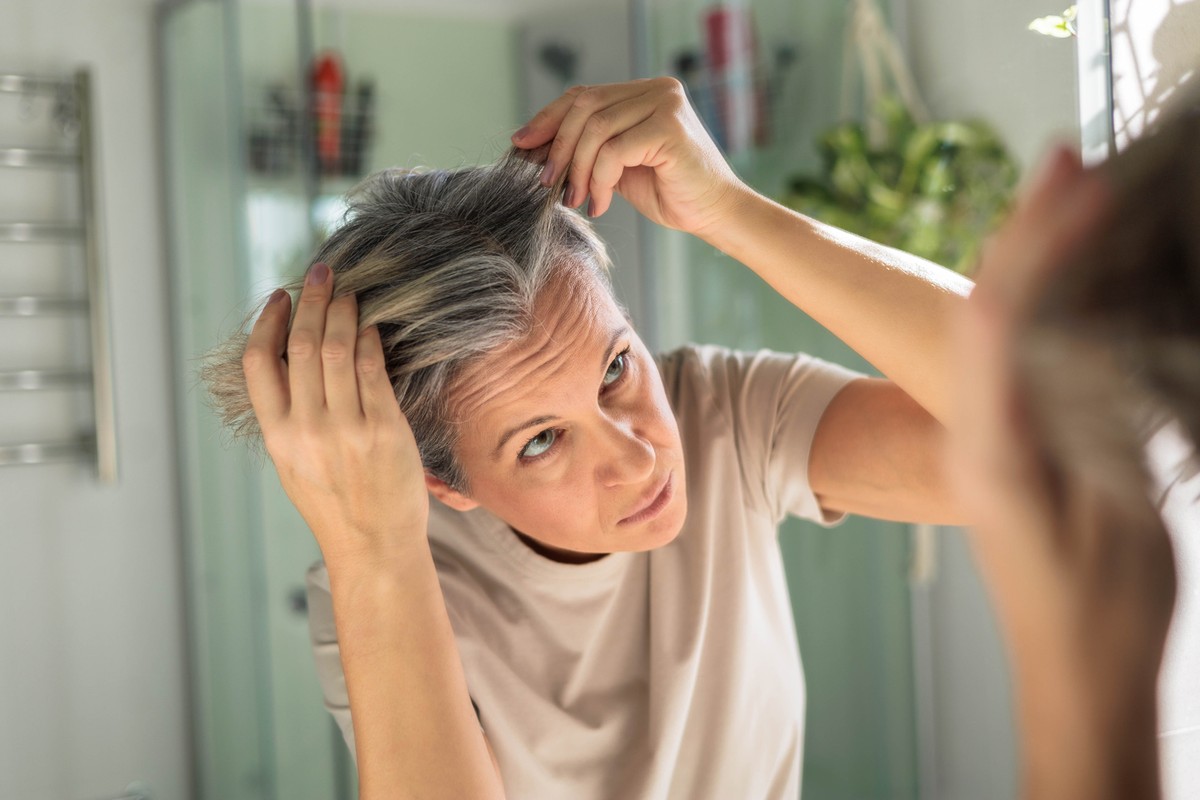
If you are noticing more hair in your brush or less volume than you are used to, this is a common part of menopause. As oestrogen and progesterone fall, your hair tends to grow more slowly and feel finer.4
One particular pattern becomes more common around menopause: a gradual thinning across the crown and sides rather than a single area or sudden change. One particular pattern becomes more common around menopause: a gradual thinning across the crown and sides rather than a single area or sudden change. It happens because as oestrogen falls, other hormones that have always been present become relatively more dominant, and that can shorten the active growing phase of each hair. If you notice this kind of thinning it is worth mentioning to your GP, partly because hair loss can come from other causes too, thyroid changes and low nutrient levels among them, and knowing what is behind it makes a difference to what helps.5
Nutrition that supports skin and hair
What you eat gives your skin and hair the materials they are built from. Protein supplies the building blocks for collagen, and foods like fish, eggs and tofu carry the amino acids your body uses to make it. Omega-3 fats, found in oily fish, walnuts, flaxseeds and chia seeds, may help your skin hold onto moisture and support healthy hair follicles. Eating these regularly, as part of a varied diet, keeps the raw materials coming.2
This kind of eating works alongside the rest of your health rather than standing in for medical advice. If you have specific concerns about nutrition during menopause, your GP is a good place to start.
Skincare approaches for menopausal skin
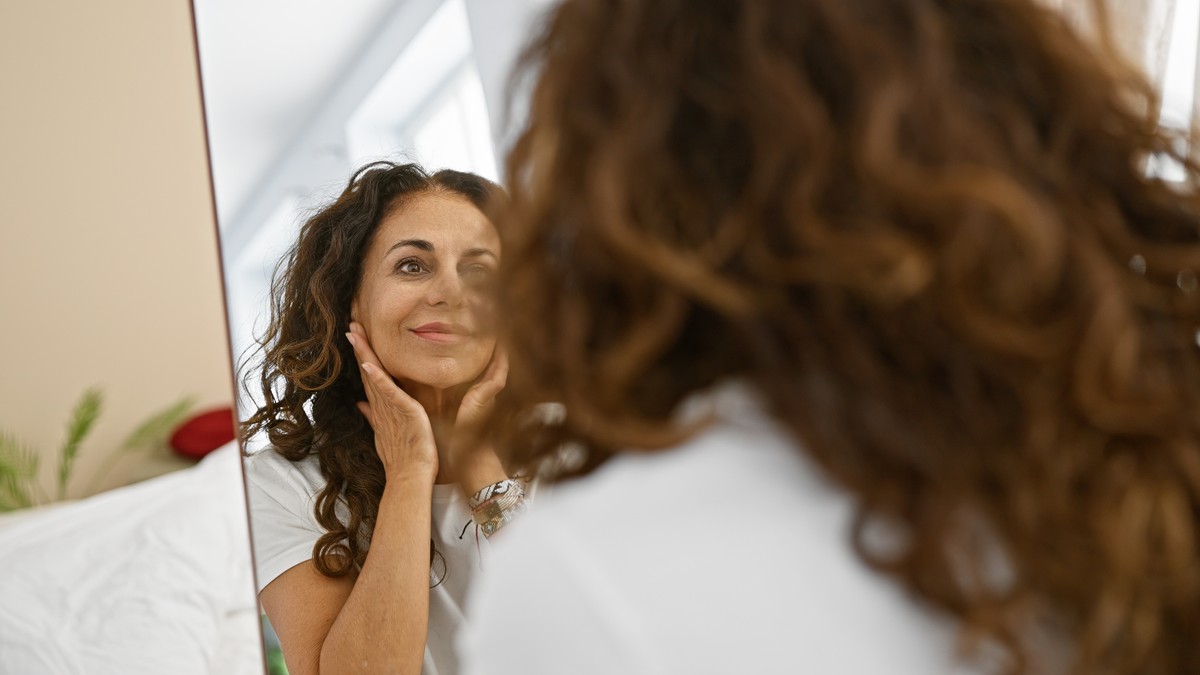
If your skin feels drier and more easily irritated, a few small changes to your routine can help. A gentle, non-foaming cleanser is less likely to strip your skin's natural oils. Moisturising morning and evening supports the skin barrier. Daily sun protection is worth adding to your mornings if it is not already there.6
A few ingredients come up often when people talk about supporting collagen. Vitamin C appears in many skincare products for this reason. Retinol, a form of vitamin A, is another that often features in skincare guidance for this stage of life. If you want to try retinol, over-the-counter products are the sensible place to begin. If you are pregnant or trying to conceive, it is best to avoid topical vitamin A products. Prescription-strength vitamin A is a separate category, and that one calls for a chat with your GP or a dermatologist.
What you can expect over time
The changes you see and feel in your skin and hair during menopause are real, and they have a clear basis in your body. They come from what steadily lower oestrogen does to the structures that rely on it. Your collagen density, skin hydration and hair growth cycles all shift. How visible or noticeable this is varies a lot from one person to the next, and there is a fair range of things you can do to support your skin and hair through it.
Skincare, food and daily habits can all help, though they work slowly and results vary. The aim is steady, consistent support for your skin and hair, rather than reversing a natural process.
If skin or hair changes are affecting you and you want to look at your options, including what is available through your GP, menopause guidance at nhs.uk is a useful place to start.