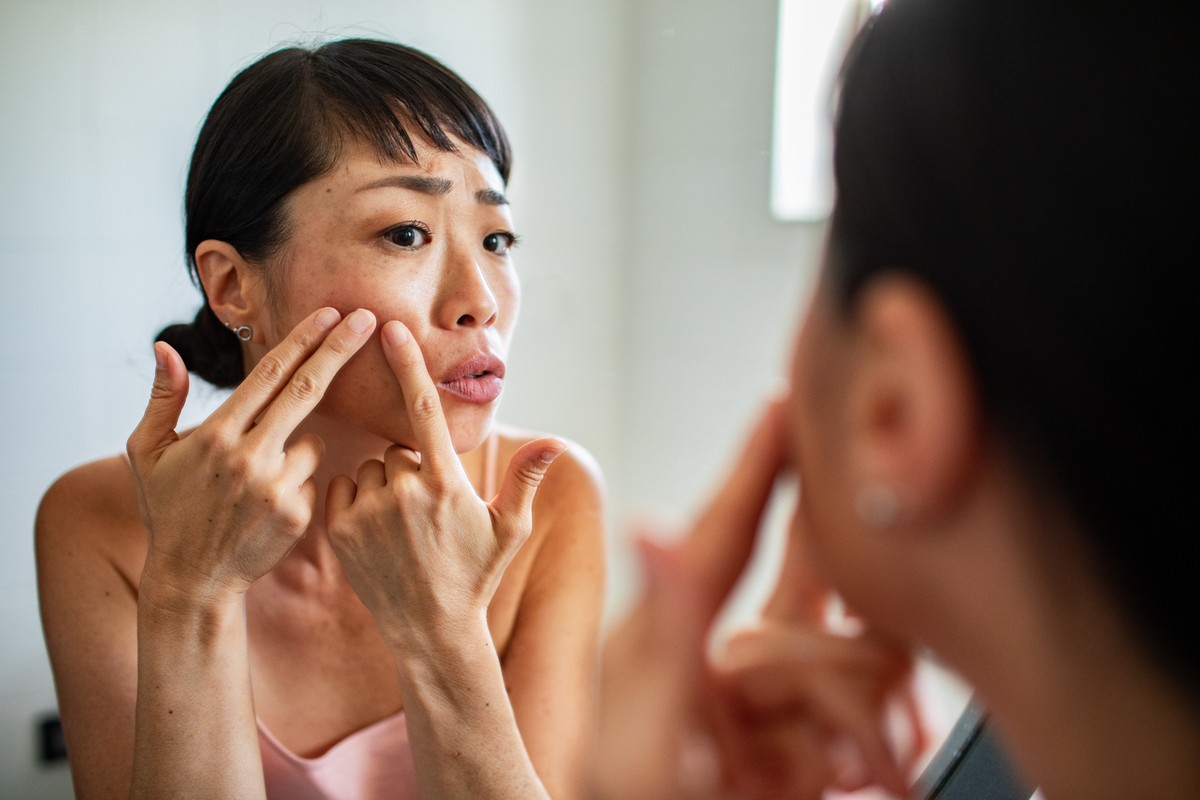
You may have noticed your skin feeling drier than it used to, or slower to settle after a long day. A tightness after washing, a roughness that was not there before, or an itchiness that turns up for no clear reason. Your hair may feel finer in your hands, or you may be seeing more of it on the shower floor. These skin and hair changes are common in perimenopause and menopause, and there is a clear biological reason behind them.7
What oestrogen does for your skin
A lot of what you are noticing comes back to oestrogen. It helps keep up the structural proteins that give your skin its strength and stretch, and it supports your skin's ability to hold onto moisture. As oestrogen drops through perimenopause, your skin slows its production of these building blocks, and its natural oils and water-holding ability fade. That is often when dryness, roughness, and more easily irritated skin start to show up, as the skin's barrier weakens.1
Collagen is the protein that takes the biggest hit. As oestrogen falls, your body makes it more slowly, and over time your skin can feel thinner, less firm, and quicker to show fine lines. The pace can surprise you. A real drop in collagen can happen in the years just after menopause begins, which is why skin changes can feel sudden even when the hormonal shift has been slow and steady.8
How these changes show up in your hair
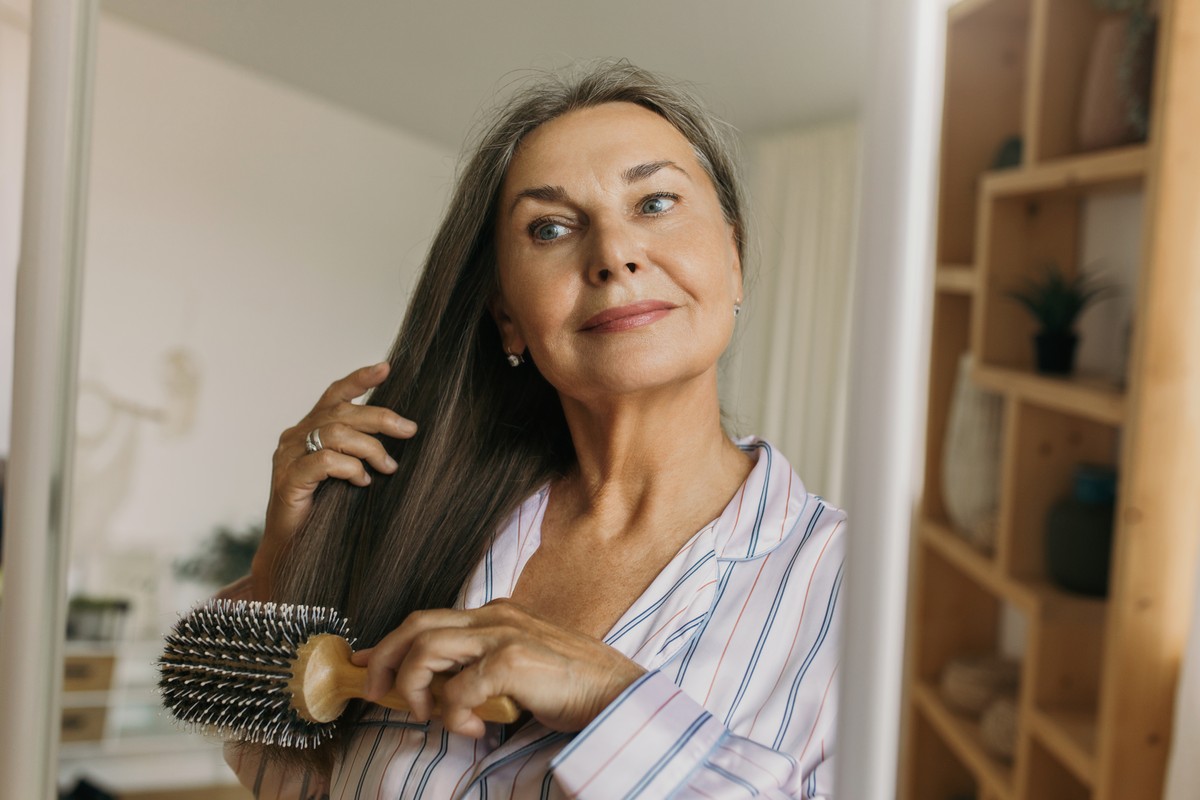
Hair thinning and hair loss are common in perimenopause and menopause too. You may notice your parting looks wider, your ponytail feels thinner, or hair that was once coarser now feels fine and fragile. This kind of all-over thinning through the perimenopausal and postmenopausal years lines up with female pattern hair loss, driven by the same hormonal change.2
As oestrogen falls, its balance with androgens such as testosterone shifts. That shift can thin the hair on your scalp, and at the same time you may notice more fine hair around your chin or upper lip. Both come from the same hormonal change, which can make the whole thing feel contradictory.39
Nutritional support for skin and hair
A varied diet rich in protein and vitamins gives your body what it needs to keep supporting your skin and hair. Protein supplies the building blocks your body uses to make collagen, and nutrients like vitamin C help that process along. A good practical starting point is a range of colourful vegetables, lean proteins, and whole foods.10
Oily fish like salmon is a source of omega-3 fatty acids, which fit into a balanced diet and line up with general healthy eating advice. If you do not eat fish, you can find omega-3s in foods like flaxseed, chia seeds, and walnuts. Keeping your fluids up supports your skin's ability to work normally. These are everyday eating habits rather than treatments, and their value is in keeping your overall nutrition steady rather than reversing the hormonal change itself.4
Skincare approaches that suit this stage
Moisturising regularly, especially right after a bath or shower while your skin is still slightly damp, helps it hold onto water. Swapping soap for a gentle, non-foaming cleanser is kinder too, since it is less likely to strip away the natural oils your skin is already making less of. These small adjustments work with your skin's changed needs rather than against them.5
Using a broad-spectrum sunscreen of SPF 30 or higher every day is one of the most reliably useful steps you can take at this stage, since UV exposure speeds up collagen breakdown in skin that is already producing less. Over-the-counter retinol products are sold as cosmetic skincare and are used to support skin texture and collagen. Prescription-strength retinoids such as tretinoin are a separate, prescription-only medicine. If you want to look into prescription options, it is worth talking to your GP or a dermatologist.6
Setting realistic expectations
The skin and hair changes you are noticing come from a real shift in how your body supports them hormonally. What has changed is the hormonal environment, and the practical steps above work alongside it. Progress tends to be gradual and results vary, so the aim of any skincare or nutrition approach here is to support comfort and function rather than to stop a biological process completely.
Hormone replacement therapy and skin and hair health
Hormone replacement therapy (HRT) is recommended in clinical guidance for managing menopausal symptoms, mainly hot flushes and night sweats. Because HRT works by topping up your falling oestrogen, you may find it helps your skin and hair too. It is a prescription medicine and is not right for everyone. Whether it suits you depends on your own health history, and that is a conversation to have with your GP or another qualified healthcare professional.11