
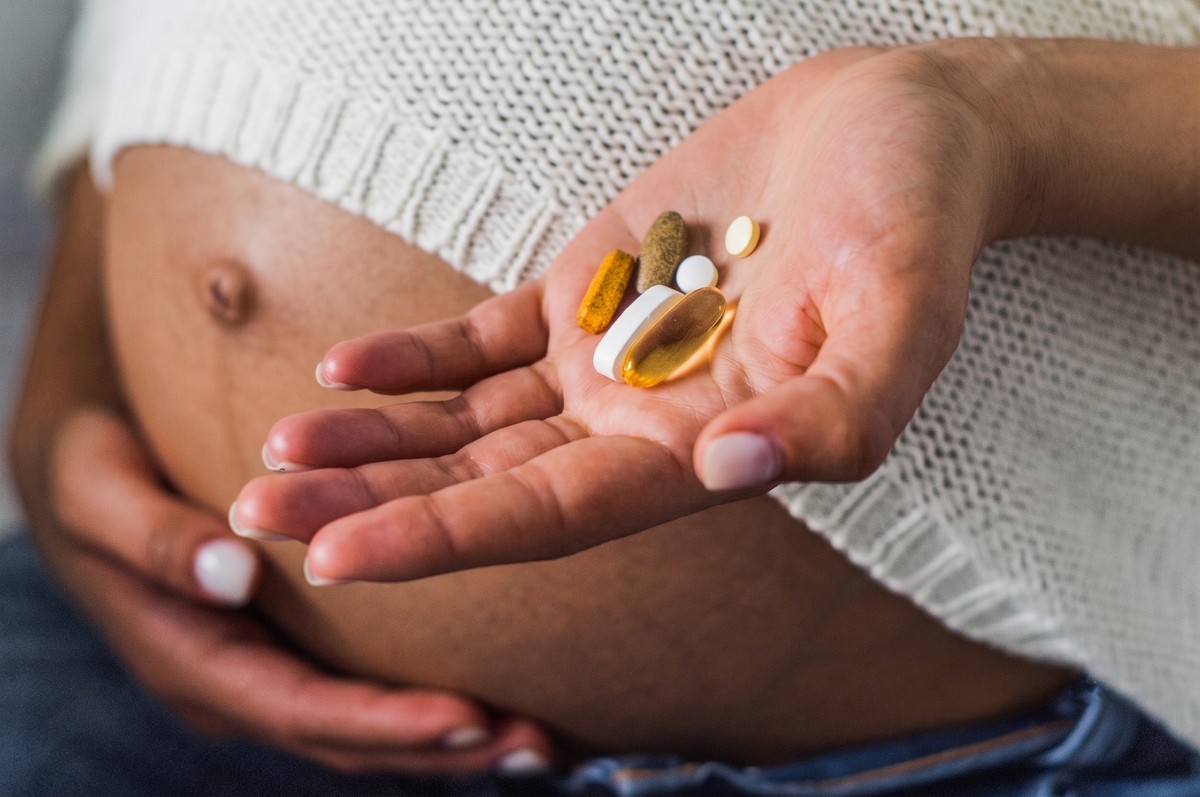
Early pregnancy often comes with a list. Take this, start that, make sure you have enough of the other. The tiredness of the first trimester is already there, and working out which supplements actually matter, and why, can feel like one more task you did not ask for. The picture is clearer than the list makes it seem. In the UK, only two supplements are officially recommended for everyone who is pregnant: folic acid and vitamin D. Everything else depends on your own situation, your diet, and what your midwife or GP finds in your blood tests.1
The two officially recommended supplements
Folic acid
Folic acid is the supplement form of folate, a B vitamin. The recommended dose is 400 micrograms (mcg) a day, from when you start trying to conceive until the end of the first 12 weeks. By 12 weeks the neural tube, the part that becomes your baby's brain and spinal cord, has already formed, which is why the timing matters.2
Folic acid lowers the chance of neural tube defects (NTDs), like spina bifida, as your baby develops. Getting enough from food alone is hard, which is why a supplement is recommended rather than relying on your diet.3
You might be prescribed a higher dose of 5 milligrams (mg). This one is a prescription medicine, not something to start on your own. Your GP or midwife prescribes it if you have a higher chance of a pregnancy affected by an NTD, for example if you have diabetes, a body mass index above 30, a personal or family history of NTDs, or if you take certain anti-epilepsy medicines. If you take anti-epilepsy medicine and are planning a pregnancy, talk to your GP before changing anything.45
Vitamin D
A daily supplement of 10 mcg of vitamin D is recommended through the whole of pregnancy and while you are breastfeeding. Unlike folic acid, this one carries on past the first trimester for the full length of your pregnancy.617
Your body makes most of its vitamin D when your skin is exposed to sunlight. In the UK, the sun is not strong enough between September and March to make enough, and food alone struggles to cover it even in the brighter months. Vitamin D supports your baby's bone development and helps your body absorb calcium.7
You may be at higher risk of low vitamin D, and a GP or midwife might suggest a higher dose. This includes if you have South Asian, African, Caribbean, or Middle Eastern family origin, a body mass index of 30 or more, or limited time in the sun. If any of these apply to you, raise it at your next appointment rather than changing your dose on your own.8

Other nutrients that matter, without a one-size-fits-all supplement
A healthy, balanced diet should cover most of the other vitamins and minerals you need in pregnancy. The nutrients below matter, but a supplement is not recommended for everyone. For each one, whether you need a supplement is a question for your midwife or GP.16
Iron
The heavy tiredness that can settle in during pregnancy sometimes comes down to iron. Your body needs more of it now to keep making red blood cells, and when levels drop too low you can develop iron deficiency anaemia, the kind of tiredness that goes beyond the usual. Low iron is common in pregnancy.9
Iron supplements are not given to everyone as a matter of course. They are only advised if your blood tests show low iron or iron deficiency anaemia. Your midwife checks your blood at routine antenatal appointments and lets you know if you need to supplement. It is worth waiting for that guidance, since taking more iron than you need can cause side effects.10
Iodine
Iodine helps your body make thyroid hormones, which your baby relies on for brain development. Dairy and fish are good sources. Many pregnancy multivitamins include iodine, which can help if your diet is low in these foods.11
There is no official UK recommendation to take an iodine supplement routinely in pregnancy. Where you can, meeting your needs through food is the advised approach.18
DHA (docosahexaenoic acid)
Docosahexaenoic acid (DHA) is a long-chain omega-3 fat that supports your baby's brain and eye development. Oily fish is the main source in food.15
There is no official UK recommendation for everyone who is pregnant to take a DHA supplement. Including oily fish in your diet is the main way to support your intake. The advice is to keep oily fish to two portions a week during pregnancy, because of the pollutants these fish can carry. If you eat little or no oily fish, talk to your midwife or GP about whether a supplement makes sense for you.13
A supplement to avoid in pregnancy
Putting it all together
The two supplements recommended for everyone in the UK are folic acid (400 mcg a day, from before conception to 12 weeks) and vitamin D (10 mcg a day, throughout pregnancy). A higher dose of folic acid is prescribed in specific situations and should only be taken on the advice of a GP or midwife. Iron supplements are only needed if blood tests confirm low levels. Iodine and DHA matter too, but a supplement is not recommended across the board.
If you are thinking about a pregnancy multivitamin, check the label to confirm it contains folic acid and vitamin D at the recommended doses, includes iodine, and does not contain retinol (preformed vitamin A). Your midwife or GP can help you find a suitable product and advise on anything your diet or your own situation may need.