

If you are already managing diabetes, pregnancy can make keeping your blood sugar stable more demanding than usual. Readings shift in ways that catch you off guard, insulin needs change week to week, and the approach that was working before may need rethinking from quite early on. Pregnancy changes how your body responds to insulin in ways that follow a broadly predictable pattern, and your GP and diabetes specialist will adjust your management plan to match each stage.
How insulin sensitivity changes across the trimesters
Your body's response to insulin changes through pregnancy, and it does so in a fairly predictable way. In the first trimester the shift is usually small, but the risk of hypoglycaemia (low blood sugar) can actually increase, particularly if you have type 1 diabetes. From the second trimester onward, hormones from the placenta cause your body to need more insulin, sometimes significantly more. It is worth staying in close contact with your GP or diabetes specialist through this, rather than adjusting doses on your own.1
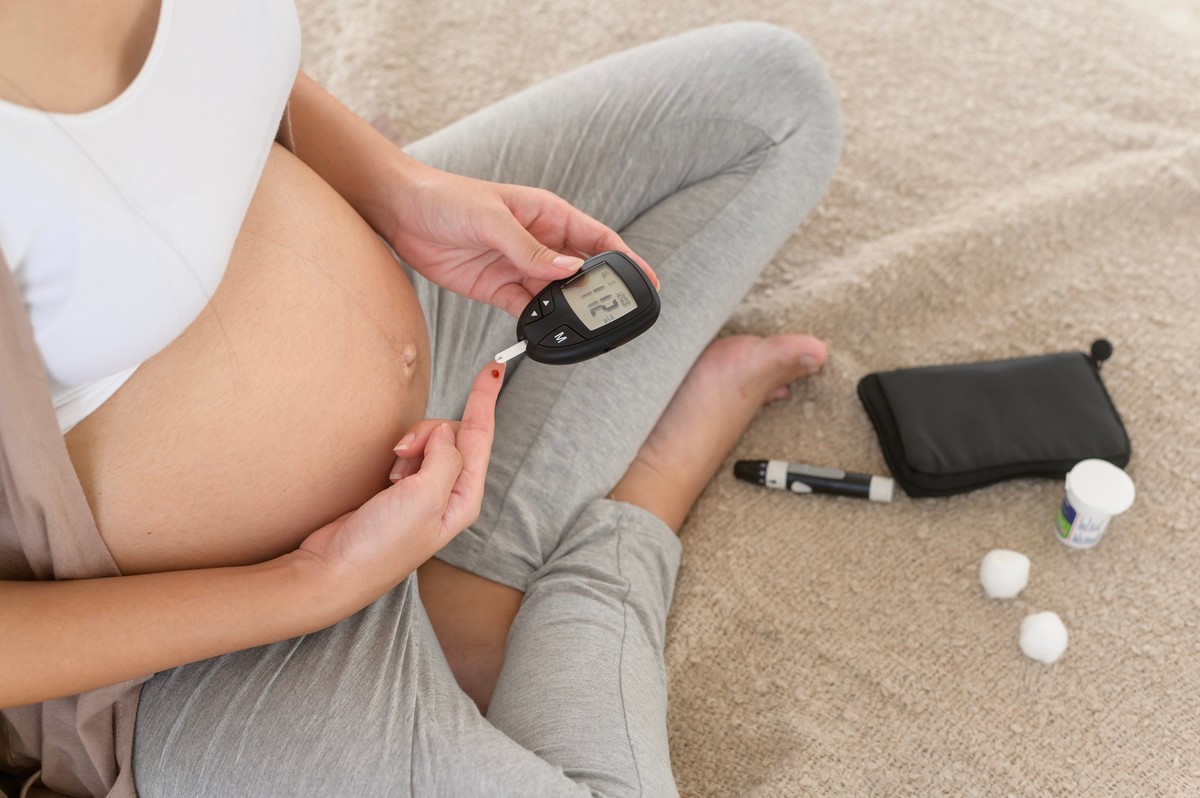
The blood glucose targets during pregnancy are tighter than the ones you may be used to outside of it. The aims are a fasting level of 5.3 mmol/l, 7.8 mmol/l one hour after meals, and 6.4 mmol/l two hours after meals.9
If you have type 1 diabetes, continuous glucose monitoring (CGM) is recommended throughout pregnancy. It uses a small sensor that tracks your blood sugar in real time, which means you can spot patterns and catch changes earlier than finger prick testing alone. For type 2 diabetes, whether it is useful depends more on your individual picture.7
Medication and monitoring changes to expect
If you take non-insulin tablets or other medications for type 2 diabetes, some may not be suitable during pregnancy and could need to be stopped. Going through everything you are taking with your GP or Diabetes Specialist early on means nothing gets missed.10
Metformin is one of the more common type 2 diabetic medications that may be continued in certain circumstances, though it does cross the placenta and its long-term effects on the baby are not yet fully understood. Insulin remains the primary recommended treatment for diabetes in pregnancy.2
If you have pre-existing diabetes, your folic acid needs are higher than the standard pregnancy dose. A daily dose of 5 mg is recommended until 12 weeks, rather than the 400 mcg supplement available over the counter. Your GP can prescribe this.11
Gestational diabetes: what it is and how it differs
Gestational diabetes mellitus (GDM) is a form of raised blood sugar that develops during pregnancy and is usually picked up through a routine test. Unlike type 1 or type 2 diabetes, it typically resolves after birth, though it does carry a longer-term risk of developing type 2 diabetes, which is why follow-up care after pregnancy matters.3
In the UK, GDM is diagnosed using an oral glucose tolerance test (OGTT), where you drink a glucose solution and have your blood tested at set intervals. This usually takes place between 24 and 28 weeks, or earlier if you are considered higher risk. The thresholds are a fasting blood glucose of 5.6 mmol/l or above, or a two-hour reading of 7.8 mmol/l or above.412
GDM is usually managed first through changes to what you eat and how active you are. If blood glucose targets are not reached through those changes, insulin or metformin may be introduced. Your GP or specialist will make that call based on how your levels are responding.13
After your pregnancy, you should be offered an annual HbA1c test, a blood test that shows your average blood sugar over the past two to three months. If it is not offered, it is worth asking your GP.
What the risks look like and how monitoring helps
Any form of diabetes in pregnancy is linked to a higher chance of certain complications, including pre-eclampsia, a larger-than-average baby, caesarean birth, preterm birth, and low blood sugar in the newborn after birth. Keeping blood sugar well managed throughout pregnancy reduces these risks considerably, which is why consistent monitoring matters at every stage.14
The care you can expect
If you have pre-existing diabetes, you should be seen by a joint obstetric and diabetes specialist, working together from your booking appointment, with more frequent check-ins than a standard pregnancy involves. If this has not been arranged, it is worth raising with your midwife or GP.15
You will also be offered additional antenatal scans, including a heart scan for your baby at around 20 weeks to check for any structural differences, and growth scans from 28 weeks onward. Whether each one goes ahead may depend on your individual clinical picture.16
Preparing for pregnancy with pre-existing diabetes
If you have pre-existing diabetes and your HbA1c has not been reviewed recently, it is worth raising at your next appointment. An HbA1c below 48 mmol/mol (6.5%) is associated with lower risks of miscarriage, congenital abnormalities and stillbirth.6
What to expect after delivery
If you have type 1 diabetes, your insulin needs typically fall sharply after birth, sometimes dropping below where they were before pregnancy. The immediate postnatal period needs careful monitoring to avoid hypoglycaemia, and whoever is managing your diabetes will keep a close eye on this in hospital and at follow-up.17
It is worth having a postnatal plan agreed before you leave hospital covering your diet and how you will manage your blood sugar levels in the early weeks.
Topics worth raising with your care team
Whatever type of diabetes you have, there are several things worth bringing up as your pregnancy progresses.
- Contraception planning and timing of pregnancy if you have pre-existing diabetes
- A review of all current medications as soon as pregnancy is confirmed or planned
- Sick-day rules specific to pregnancy, which differ from standard guidance
- Retinal and renal screening, as diabetic retinopathy can worsen during pregnancy
- Timing and mode of birth
- Breastfeeding plans and postnatal blood glucose management
- Post-GDM follow-up, including your annual HbA1c check518